
Understanding the Role of Oracles in Blockchain Ecosystems
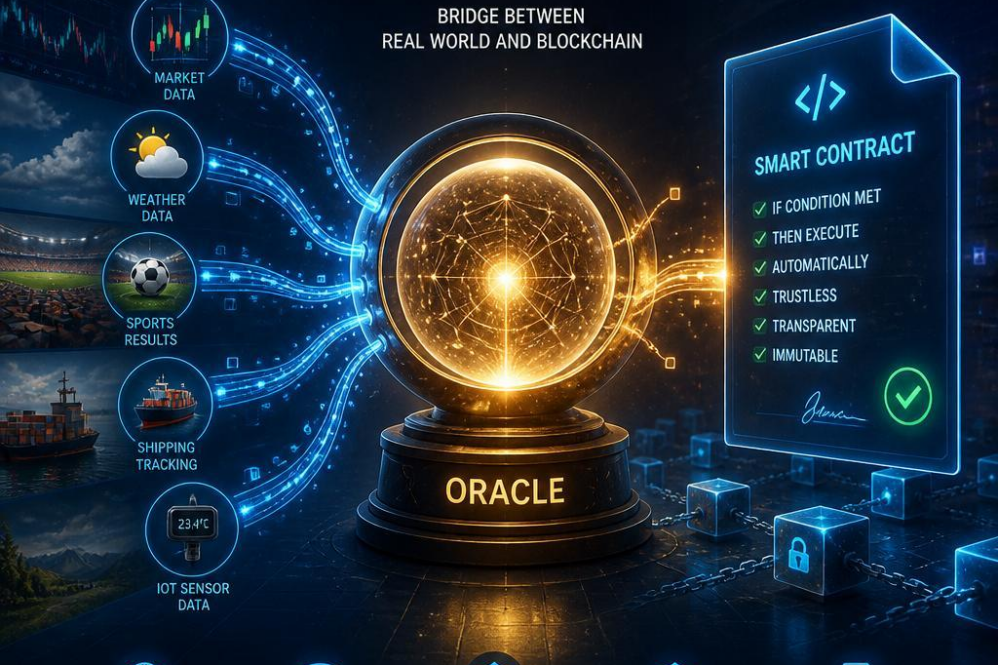
Oracles serve as the indispensable bridge between blockchain smart contracts and the external world, providing off-chain information that blockchain networks inherently cannot access on their own. Without oracles, smart contracts would be confined to executing solely based on on-chain data. By securely feeding real-world data such as market prices, weather conditions, or event results, oracles enable smart contracts to interact with dynamic environments, vastly expanding their utility and applicability.
The functionality of an oracle depends on its ability to retrieve, verify, and transmit data to the blockchain in a trustworthy manner. This process involves pulling data from various sources like APIs, IoT devices, or traditional database feeds, and then converting this data into a format that smart contracts can understand and process automatically. The challenge here lies in ensuring data integrity and preventing manipulation, making decentralized oracles highly valued for their resistance to single points of failure and greater transparency.
Key attributes of effective blockchain oracles:
- Reliability: Consistent delivery of accurate and timely data.
- Security: Protection against tampering and fraudulent data injection.
- Scalability: Ability to handle increasing volumes and complexity of data.
Below is a concise comparison of oracle types often utilized in blockchain ecosystems:
| Oracle Type | Data Source | Use Case | Strength |
|---|---|---|---|
| Software Oracles | APIs, Web Feeds | Price Feeds, Financial Data | Fast & Automated |
| Hardware Oracles | IoT Devices, Sensors | Supply Chain, Weather | Physical Data Access |
| Inbound Oracles | External Data to Blockchain | Event Results, Market Prices | Data Injection |
| Outbound Oracles | Blockchain Data to External | Payment Triggers | Execution Across Systems |
Types of Oracles and Their Mechanisms for Data Integration
Oracles can be broadly categorized into several types based on how they source and transmit data to smart contracts. The most common classifications include software oracles, which fetch real-time data from online sources such as APIs, websites, and databases, and hardware oracles, which rely on physical devices or sensors to input real-world events (like temperature, location, or motion) into the blockchain ecosystem. Each type leverages distinct mechanisms tailored to specific environments and use cases, ensuring relevant and accurate data delivery.
Inbound oracles serve as conduits for external data entering a blockchain, enabling smart contracts to react to real-world events. Conversely, outbound oracles transmit information from smart contracts to external systems, often triggering real-world actions or notifying off-chain services. This interplay allows smart contracts not only to receive data but also to influence external processes, establishing a bidirectional communication channel between blockchain and reality.
Among the various integration mechanisms, centralized oracles operate under a single entity controlling data flow, offering simplicity and speed but at the expense of introducing trust dependencies. In contrast, decentralized oracles aggregate data from multiple independent sources or nodes, mitigating risks of manipulation through consensus protocols. This architecture enhances reliability and security, making decentralized oracles especially suited for high-stakes financial and governance applications.
| Oracle Type | Data Source | Integration Mechanism | Use Case |
|---|---|---|---|
| Software Oracle | APIs, Websites | Automated data fetching | Price Feeds, Weather Data |
| Hardware Oracle | Sensors, IoT Devices | Physical event detection | Supply Chain, Asset Tracking |
| Centralized Oracle | Single Trusted Source | Direct Data Provision | Simple Contract Triggers |
| Decentralized Oracle | Multiple Nodes | Consensus Data Aggregation | DeFi, DAO Governance |
Challenges in Ensuring Oracle Reliability and Security
Ensuring the reliability of Oracles is a complex endeavor that hinges on their ability to provide accurate, timely, and tamper-proof data. Since smart contracts operate autonomously based on the input they receive, any discrepancy or delay in data delivery can lead to erroneous contract execution or financial loss. The decentralized nature of blockchains magnifies this challenge because Oracles must bridge off-chain information with on-chain logic without compromising trustlessness. Therefore, maintaining a robust data pipeline with multiple independent sources and consensus mechanisms is essential to mitigate single points of failure.
Security concerns are equally significant, as Oracles are prime targets for malicious actors aiming to manipulate outcomes. Vulnerabilities can arise at different points of the data lifecycle-whether during data collection, transmission, or processing. Attack vectors include data spoofing, Sybil attacks, and front-running, all of which threaten the integrity of the smart contract ecosystem. Implementing cryptographic proofs, secure hardware modules, and rigorous validation protocols are vital strategies to counteract these threats.
Another considerable challenge is the issue of trust delegation. Many blockchain networks value decentralization, yet they rely on Oracles that might operate as centralized entities or consortiums. This creates a paradox where a single Oracle or a limited group wields immense influence over contract outcomes. To address this, developers often employ decentralized Oracle networks (DONs) that aggregate inputs from multiple sources, balancing trust and efficiency but adding complexity in coordination, cost, and latency.
| Challenge | Key Mitigation | Impact |
|---|---|---|
| Data Accuracy | Multiple independent sources | Ensures truthful contract execution |
| Security Threats | Cryptographic verification & hardware | Prevents tampering and spoofing |
| Trust Centralization | Decentralized Oracle networks | Reduces single points of failure |
| Latency & Cost | Optimized data aggregation | Maintains performance & affordability |
Ultimately, balancing reliability and security in Oracle design demands continuous innovation and rigorous testing. As blockchain applications evolve and scale, Oracles must adapt to increasingly sophisticated adversaries and diverse data sources. Only through a combination of technical safeguards, decentralized architectures, and transparent governance can Oracles sustain the trustworthiness essential for smart contracts to impact real-world systems confidently.
How Oracles Bridge the Gap Between Off-Chain Data and Smart Contracts
Smart contracts operate within blockchain environments, which are inherently isolated from external systems, limiting their ability to access real-world information directly. Oracles serve as crucial intermediaries by fetching, verifying, and transmitting off-chain data to these contracts. This enables decentralized applications to respond to real-time events such as market prices, weather conditions, or shipment status, effectively making smart contracts dynamic and context-aware.
There are various types of oracles, each suited for different use cases. Software oracles pull data from online sources like APIs, web scraping, or databases, while hardware oracles collect information from sensors and IoT devices in the physical world. Additionally, consensus oracles aggregate data from multiple sources to ensure reliability and prevent manipulation. This layered approach guarantees that smart contracts receive accurate and trustworthy data inputs critical for automated decision-making.
- Inbound Oracles: Deliver external information to the blockchain environment.
- Outbound Oracles: Send blockchain data to an external system.
- Cross-Chain Oracles: Facilitate communication between different blockchain networks.
To maintain security, oracles employ various mechanisms such as cryptographic proofs, decentralization through numerous independent data providers, and incentive models aligned to truthful reporting. Through these features, they attentively bridge the deterministic world of smart contracts with the unpredictable realm of external data, unlocking powerful automation capabilities unprecedented in traditional programming.
Best Practices for Selecting and Implementing Oracles in Smart Contract Development
Selecting the right oracle for smart contract development hinges on evaluating the reliability and security of the oracle provider. Since oracles serve as critical conduits between off-chain data and on-chain protocols, it’s essential to prioritize sources that offer data integrity guarantees, tamper-resistant architectures, and transparent data provenance. Developers should thoroughly analyze the oracle’s consensus mechanism-whether it’s centralized, decentralized, or hybrid-and how it mitigates risks of data manipulation or downtime.
When implementing oracles, it’s best practice to integrate multiple data feeds to reduce single points of failure. Combining input from diverse oracles enables the smart contract to leverage a consensus approach, enhancing accuracy and resilience against faulty or malicious inputs. Additionally, designing fallback mechanisms and regular audits on data quality are pivotal steps to safeguard the contract’s operational integrity in dynamic real-world scenarios.
Security considerations must be at the forefront throughout the oracle integration lifecycle. Utilize cryptographic proofs such as TLSNotary, Intel SGX, or zero-knowledge proofs where applicable to verify that data originated from trusted sources without tampering. Embedding rigorous access control policies for oracle endpoints and implementing rate limiting can further defend against abuse and data flooding attacks.
| Best Practice | Description | Impact |
|---|---|---|
| Decentralized Oracle Networks | Use multiple independent nodes | High reliability & security |
| Data Validation Layers | Cross-check and filter input data | Increased trustworthiness |
| Cryptographic Proofs | Verify source authenticity | Mitigates tampering risks |
| Fallback and Redundancy | Enable alternative data sources | Maintains uptime & availability |
Future Trends and Innovations Shaping Oracle Technology
Oracle technology is rapidly evolving, driven by breakthroughs in artificial intelligence, decentralized finance, and cloud-native architectures. One significant innovation is the integration of autonomous AI databases that seamlessly support real-time data ingestion and verification, enhancing the reliability of oracles feeding smart contracts. This shift empowers decentralized applications to operate with unprecedented accuracy and trustworthiness, reducing manual intervention and latency in transforming external data into actionable on-chain insights.
Emerging trends include advanced cryptographic proof systems and multi-party computation protocols which ensure that data submitted by oracles is tamper-proof and validated through consensus mechanisms. These innovations guard against fraud and single points of failure, offering a more resilient infrastructure for smart contracts dependent on external inputs such as financial prices, IoT sensor data, or weather reports.
- Decentralized oracle networks: expanding collaboration across multiple data sources
- AI-powered data curation: automating data accuracy verification before delivery
- Interoperability frameworks: enabling oracles to serve across diverse blockchain platforms
- Edge computing integration: bringing low-latency data capture closer to the source
To illustrate, the following table highlights key innovations and their impact on oracle performance and smart contract integration:
| Innovation | Benefit | Use Case |
|---|---|---|
| Autonomous AI Database | Automated data validation | Real-time financial feeds |
| Multi-party Computation | Enhanced data security | Decentralized insurance claims |
| Interoperability Protocols | Cross-chain data sharing | Complex DeFi applications |
| Edge Computing | Lower latency delivery | IoT-triggered smart contracts |
Looking ahead, the convergence of these technologies will redefine how oracles operate, enabling not only more precise data feeds but also fostering composability between traditional enterprise systems and decentralized smart contracts. This evolution marks a critical juncture where oracles transition from simple data providers to intelligent middleware layers, unlocking new possibilities for automated, trustless digital agreements.


