Introduction to Ethereum Stablecoins and Their Role in the Crypto Ecosystem
Ethereum’s vibrant ecosystem is uniquely supported by stablecoins-cryptocurrencies explicitly designed to maintain a stable value, typically pegged to fiat currencies like the US dollar. These assets provide a vital bridge between traditional finance and the blockchain world, mitigating volatility inherent in cryptocurrencies such as Ether (ETH). By anchoring value stability, stablecoins enable seamless transactions, lending, and decentralized finance (DeFi) applications within Ethereum’s blockchain, fostering trust and widespread adoption.
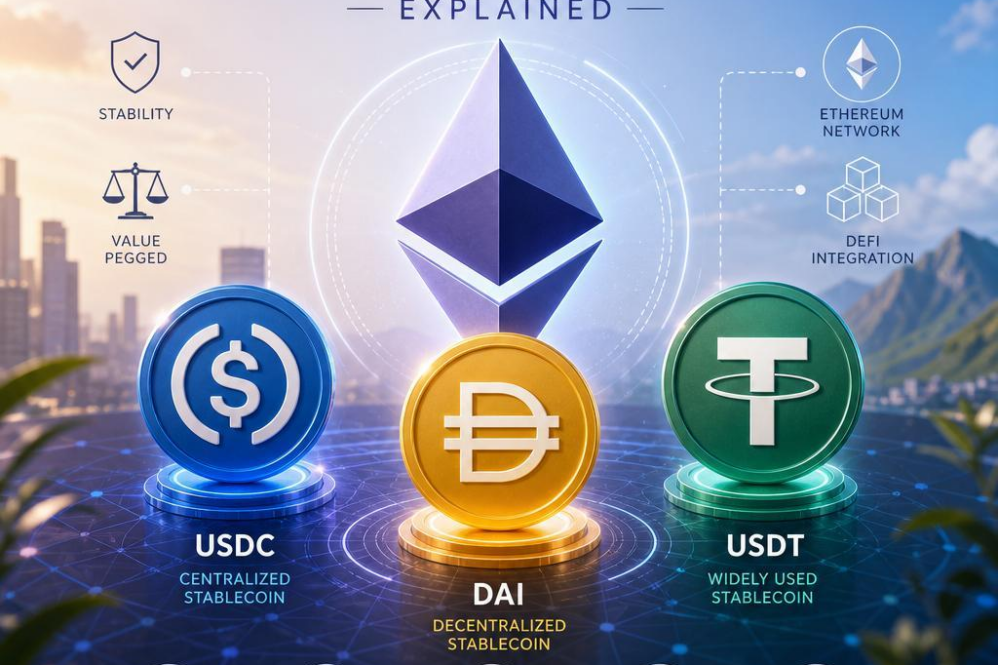
Among Ethereum’s stablecoins, USDC, DAI, and USDT stand out as the most prominent, each operating with distinct mechanisms and governance models. USDC and USDT are centralized, fiat-collateralized stablecoins managed by regulated entities, offering users the reassurance of a reserve backing every token issued. In contrast, DAI is a pioneering decentralized stablecoin, dynamically collateralized by various Ethereum-based assets to maintain its peg through smart contracts without relying on a central issuing authority.
These stablecoins serve multiple key roles within the crypto ecosystem, including:
- Liquidity Provision: Enabling instant swaps and facilitating trading pairs on decentralized exchanges (DEXs).
- DeFi Functionality: Acting as collateral, lending assets, or yield farming tokens within lending protocols and smart contract platforms.
- Financial Inclusion: Offering accessible digital dollar equivalents for users in regions with unstable local currencies or limited banking infrastructure.
| Stablecoin | Type | Backing | Governance |
|---|---|---|---|
| USDC | Fiat-Collateralized | USD Reserves | Centralized (Circle & Coinbase) |
| DAI | Crypto-Collateralized | ETH & Other Collateral | Decentralized (MakerDAO) |
| USDT | Fiat-Collateralized | USD Reserves | Centralized (Tether Ltd.) |

In-depth Analysis of USDC: Backing, Transparency, and Use Cases
USDC’s backing structure is one of its key differentiators in the stablecoin market. Each USDC token is fully collateralized by a US dollar or cash equivalent held in reserve, ensuring a 1:1 peg with the USD. This reserve is not only maintained by Circle, the regulated issuer of USDC, but also audited monthly by a top-tier Big Four accounting firm. This level of financial rigor offers investors and users a strong sense of security regarding the coin’s liquidity and redemption capabilities, making USDC a trusted digital dollar alternative.
Transparency is embedded at the core of USDC’s operational framework. Unlike some stablecoins where reserve reporting is opaque or infrequent, USDC’s monthly attestations provide a verifiable and up-to-date snapshot of its reserves. Circle publicly discloses these audit reports, which detail the total USDC supply against the actual reserves held. This commitment to openness reinforces regulatory compliance and assures users of the coin’s stability amidst volatile market conditions.
When it comes to use cases, USDC has established a broad footprint across the digital economy. It powers seamless payments, remittances, and decentralized finance (DeFi) protocols, providing users with a reliable medium of exchange and store of value within the Ethereum ecosystem and beyond. Its regulatory clarity supports institutional adoption, bridging traditional finance with blockchain innovation. Developers integrate USDC into lending platforms, yield farming, and token swaps, leveraging its stability to reduce exposure to price fluctuations.
| Feature | USDC Advantage |
|---|---|
| Backing | 100% USD or equivalent reserves |
| Transparency | Monthly audited reports publicly available |
| Regulation | Issued by a licensed financial service company |
| Use Cases | Payments, DeFi, institutional finance |
- Fully-backed reserves mitigate risk of devaluation
- Regular audits ensure continuous transparency
- Regulatory compliance boosts institutional trust
- Multi-sector adoption drives liquidity and utility
Understanding DAI: Decentralization, Stability Mechanisms, and Governance
DAI stands out among stablecoins due to its decentralized nature, operating without reliance on a central issuer or fiat reserves. Instead, it is minted through smart contracts on the Ethereum blockchain, backed by overcollateralized crypto assets like Ether (ETH) and other approved tokens. This system allows users worldwide to generate DAI by locking collateral in MakerDAO’s Vaults, ensuring the stablecoin’s supply is directly tied to blockchain-verified assets rather than external entities.
The stability of DAI is maintained through a complex set of mechanisms designed to keep its value pegged closely to one US dollar. Key among these is the collateralization ratio requirement which enforces users to deposit assets exceeding the value of DAI they mint, protecting against market volatility. Additionally, the system employs Automated Market Operations (AMOs) and stability fees-akin to interest rates-that incentivize users to mint or burn DAI in response to price fluctuations, actively maintaining the peg.
Governance in DAI’s ecosystem is a decentralized process driven by MKR token holders who participate in critical decision-making. These stakeholders vote on protocol upgrades, collateral types accepted, risk parameters, and fee structures. This democratic involvement promotes transparency and adaptive risk management, enabling the system to evolve responsively according to market conditions and community consensus without centralized control.
| Aspect | Key Features | Purpose |
|---|---|---|
| Decentralization | Smart contract-based, no central issuer | Ensures censorship resistance and transparency |
| Stability Mechanisms | Collateralization ratio, stability fees, AMOs | Maintains USD peg despite crypto volatility |
| Governance | MKR token holder voting | Community-driven protocol evolution |
- Collateral diversity enhances resilience against single asset crashes.
- Automated liquidation protects the system when collateral value drops below thresholds.
- Transparency via on-chain activity and open-source code.
- Incentives align user participation with system stability.
Examining USDT: Market Dominance, Controversies, and Risk Factors
USDT’s market dominance is a testament to its widespread adoption and liquidity within the cryptocurrency ecosystem. As one of the earliest stablecoins, Tether has cemented itself as a primary vehicle for trading, hedging, and transferring value across exchanges globally. Its close peg to the U.S. dollar offers traders a familiar anchor amidst crypto volatility. Despite minor fluctuations, USDT generally maintains a steady price near $1.00, supported by substantial liquidity on platforms such as Binance and Crypto.com . This dominant presence makes it a necessary component in the DeFi and trading infrastructures.
However, USDT’s rise has not been without controversy. The primary concern revolves around the transparency and backing of its reserves. Unlike fully auditable stablecoins, Tether Ltd. has faced criticism over claims that its circulating tokens are not entirely backed 1:1 by U.S. dollars or equivalent assets at all times. This opacity has sparked regulatory scrutiny and skepticism among institutional investors. Despite assurances from the issuer about reserves composed of bank balances, loans, and other assets , the lack of regular, comprehensive audits continues to fuel debate regarding its solvency under crisis scenarios.
From a risk perspective, USDT carries unique considerations beyond general crypto volatility. Users should be keenly aware of potential regulatory clampdowns, especially given the attention from U.S. and international financial authorities. The centralized management structure means that decisions by Tether Ltd.-including freeze orders or asset reallocation-could directly impact token holders. Additionally, systemic risks loom if confidence in USDT’s backing erodes, triggering sharp price deviations and liquidity crunches which may propagate shocks through paired crypto assets and DeFi protocols relying on its stability.
| Aspect | Detail | Impact |
|---|---|---|
| Market Cap | Over $80 billion (approximate) | Largest by circulation, high liquidity |
| Transparency | Limited audit disclosures | Skepticism & regulatory risks |
| Regulatory Risk | Under investigation by multiple jurisdictions | Potential for tightening controls |
| Backing Assets | Bank reserves, loans, commercial paper | Questions about asset quality |
In conclusion, while USDT remains a dominant player in the stablecoin landscape, its legacy is intertwined with ongoing challenges related to trust and oversight. Participants using USDT should balance its undeniable utility against these inherent risks, maintaining vigilance as the regulatory and market environment evolves. Being informed about the nature of its reserves and centralized structure is key to understanding both its resilience and vulnerabilities.
Comparative Evaluation of USDC, DAI, and USDT for Different User Needs
USDC stands out for users who prioritize transparency and regulatory compliance. Backed fully by fiat reserves held in regulated institutions, USDC offers a reliable peg to the US dollar, making it ideal for businesses, institutional investors, and traders who require a highly auditable stablecoin. Its strong ties to centralized entities ensure quick redemption and broad acceptance across exchanges and DeFi platforms, favoring users who value security and predictable liquidity.
DAI, as a decentralized stablecoin governed by the MakerDAO community, appeals primarily to those who seek censorship resistance and governance participation. Instead of relying on fiat reserves, DAI is collateralized by crypto assets locked in smart contracts. This makes it perfect for decentralized finance enthusiasts and crypto-native users who prefer a trustless, permissionless system. Buyers looking to avoid centralized oversight or regulatory bottlenecks often gravitate towards DAI’s model.
USDT remains the most widely adopted stablecoin due to its high liquidity and long-standing market presence. Ideal for high-frequency traders and global remittance users, USDT offers fast transactions and compatibility across nearly every crypto exchange worldwide. However, its centralized issuance and occasional transparency concerns might not suit users seeking full decentralization or institutional-grade regulatory assurances.
| Feature | USDC | DAI | USDT |
|---|---|---|---|
| Backing | Fiat reserves | Crypto collateral | Fiat reserves |
| Governance | Centralized (Circle) | Decentralized (MakerDAO) | Centralized (Tether) |
| Best for | Compliance-focused users | DeFi enthusiasts | High liquidity traders |
| Transparency | High | Open-source audits | Moderate |
- Users seeking regulatory clarity: USDC provides the strongest compliance and audit trails.
- Decentralization advocates: DAI delivers a permissionless and community-driven framework.
- Liquidity and market reach: USDT dominates with unmatched volume and exchange support.
Strategic Recommendations for Choosing the Right Ethereum Stablecoin
When evaluating stablecoins on the Ethereum network, it’s crucial to align your choice with your specific needs and risk tolerance. USDC is often favored for institutional-grade security and strong regulatory compliance, making it ideal for users prioritizing transparency and reliability. Conversely, DAI offers a decentralized alternative, underpinned by smart contracts and a system of collateralized debt positions, appealing to those who value censorship resistance and autonomy.
Consider your use case carefully-whether it’s for trading, lending, or long-term holding. For instance, users seeking minimal volatility and widespread acceptance might prioritize USDT due to its large market capitalization and liquidity. However, bear in mind that its centralized nature has raised concerns over transparency, which might influence your decision depending on your trust levels in the issuing entity.
Beyond the stablecoin’s core attributes, pay attention to network fees and transaction speed. Since all three coins operate on Ethereum, gas costs can be significant during network congestion. To mitigate this, some users prefer DAI’s integration with Layer 2 solutions, which can reduce transaction costs, while USDC and USDT typically benefit from broader adoption on multiple blockchains, providing flexibility in transfers.
Below is a simple comparison to help crystallize these strategic considerations:
| Feature | USDC | DAI | USDT |
|---|---|---|---|
| Issuer | Circle (Centralized) | MakerDAO (Decentralized) | Tether Ltd. (Centralized) |
| Transparency | Audited reserves | On-chain collateral | Limited auditing |
| Best Use Case | Regulated environments | DeFi applications | High liquidity trading |
| Transaction Costs | Moderate | Low on Layer 2 | Moderate |
Ultimately, selecting the right Ethereum stablecoin demands a balance between regulatory considerations, decentralization preferences, transaction efficiency, and your individual financial goals. Staying informed about ongoing developments and audits can provide an additional layer of confidence in your choice.


