
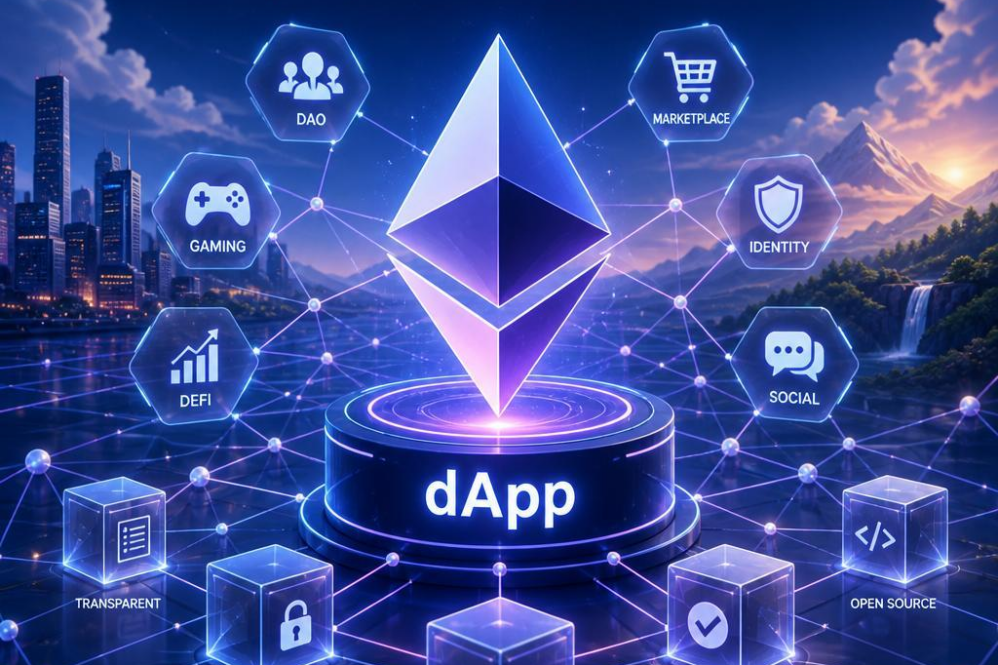
Understanding the Core Principles of Decentralized Applications
Decentralized applications, or dApps, operate on the foundational principle of distributing authority and control away from any single centralized entity. Unlike traditional apps that rely on a central server or organization to govern their operations, dApps leverage blockchain networks-such as Ethereum-to ensure that decisions, data, and trust are shared across a broad set of participants. This architecture fosters transparency, security, and resilience as no single point of failure or manipulation exists within the network.
At the core of dApps lies the concept of a trustless environment, where users do not need to rely on intermediaries or centralized authorities. Instead, smart contracts-self-executing code stored on the blockchain-automatically enforce rules and transactions with predetermined conditions. This enables users to interact directly and securely, minimizing the risk of censorship, fraud, or downtime often associated with centralized systems.
Understanding dApps also requires grasping the decentralization spectrum that defines their structure. Decision-making power, data storage, and operational functions are distributed across multiple nodes, reducing dependency on any single party. This impact can be summarized as:
- Increased fault tolerance: The network remains operational even if some nodes fail.
- Enhanced user control: Users retain ownership over their data and assets.
- Open participation: Anyone can join or contribute to the network without gatekeepers.
| Principle | Description | Benefit |
|---|---|---|
| Distributed Authority | Power is shared among many nodes, not a single entity. | Reduces manipulation and central point failure. |
| Smart Contracts | Self-executing code governs app logic automatically. | Ensures transparency and trustless interactions. |
| Immutable Ledger | All transactions are recorded permanently on blockchain. | Guarantees data integrity and auditability. |

How Ethereum Enables the Development and Deployment of dApps
Ethereum fundamentally revolutionizes application development through its decentralized blockchain infrastructure, enabling developers to build and deploy dApps without relying on centralized servers. This not only enhances security and transparency but also ensures censorship resistance and trustless interactions. At the core of this capability is Ethereum’s smart contract functionality – self-executing code that automatically enforces agreements and protocols, eliminating the need for intermediaries.
Developers write smart contracts using Ethereum’s native programming language, Solidity, which compiles into bytecode executed across the entire network. This decentralized execution guarantees that dApps run exactly as intended, with all operations validated by the Ethereum blockchain. By offering a robust, tamper-proof environment, Ethereum empowers applications in diverse sectors including decentralized finance (DeFi), gaming, digital identity, and supply chain management.
Ethereum’s modular ecosystem further accelerates dApp innovation by providing essential tools and frameworks that simplify development. Through platforms like Truffle, Hardhat, and OpenZeppelin, developers gain access to libraries, testing suites, and security audits that streamline the coding process. Moreover, Ethereum’s widespread adoption cultivates a vibrant community offering shared knowledge, funding channels, and integration possibilities – vital components for sustained dApp growth.
| Key Ethereum Features | Benefit to dApps |
|---|---|
| Smart Contracts | Automated, secure, trustless execution |
| Decentralized Network | Immutability and censorship resistance |
| Developer Tools | Streamlined creation and testing |
| Token Standards (ERC-20, ERC-721) | Interoperability and easy asset integration |
By integrating these capabilities, Ethereum creates a fertile environment where dApps not only function independently from centralized control but can also leverage tokenization standards like ERC-20 and ERC-721 to incorporate cryptocurrencies and NFTs. This unique combination of decentralization, programmability, and community support has cemented Ethereum as the leading platform for dApp development worldwide.
Key Features and Advantages of Using dApps Over Traditional Apps
Decentralization stands as the cornerstone of dApps, setting them apart from traditional applications. Unlike centralized apps controlled by a single entity, dApps operate on blockchain networks like Ethereum, distributing data and processes across numerous nodes. This architecture eliminates single points of failure, greatly enhancing security and uptime. As a result, users benefit from an immutable and transparent system where trust is algorithmically enforced rather than reliant on intermediaries or centralized authorities.
Transparency and trustlessness are profound advantages inherent in decentralized applications. Since dApps run on public blockchains, their code and transaction histories are fully auditable by anyone. This openness helps to prevent fraud and censorship while ensuring that no party can alter or manipulate the data without consensus. In contrast, traditional apps often obscure backend processes, making user trust contingent on opaque corporate policies and centralized data control.
Another critical benefit lies in user empowerment and privacy. dApps enable users to maintain control over their digital identities and assets through cryptographic keys rather than depending on third-party authentication systems. This minimizes risks related to data breaches and identity theft often seen in conventional apps. Additionally, dApps can operate with pseudonymous users, supporting privacy-preserving interactions that protect personal information from unnecessary exposure.
| Feature | dApps | Traditional Apps |
|---|---|---|
| Data Control | Distributed across nodes | Centralized servers |
| System Transparency | Open-source and immutable | Closed-source, opaque |
| Security Model | Consensus-driven, resistant to censorship | Vulnerable to hacking and censorship |
| User Privacy | User-managed cryptographic keys | Dependent on centralized identity systems |
Finally, longevity and censorship resistance define dApps’ unique value proposition. Since data and rules are embedded in blockchain smart contracts, applications continue functioning as long as the network exists, immune to shutdowns or unilateral restrictions commonly imposed on traditional apps by platform owners or governments. This ensures that innovative services remain accessible globally without interference, fostering a truly open and permissionless digital economy.
Common Use Cases and Industry Applications of Ethereum-Based dApps
Ethereum-based decentralized applications (dApps) have transformed various industries by leveraging blockchain’s trustless and transparent nature. One of the most prominent use cases lies in decentralized finance (DeFi), where dApps enable peer-to-peer lending, borrowing, and trading without traditional intermediaries. This innovation has unlocked access to financial services globally, reducing reliance on banks and centralized entities while enhancing liquidity and inclusivity.
Beyond finance, the entertainment and gaming sectors have embraced Ethereum dApps to revolutionize digital ownership and in-game economies. Non-fungible tokens (NFTs) allow for provable ownership of digital art, collectibles, and virtual real estate, creating new avenues for artists and gamers to monetize their creations securely. Through smart contracts, these assets are freely transferable and verifiable, eliminating fraud and central control.
Supply chain management is another critical domain transformed by Ethereum’s decentralized apps. By recording each step of a product’s journey on a transparent, immutable ledger, businesses and consumers gain unprecedented traceability and authenticity verification. This not only boosts trust but also significantly reduces counterfeiting and fraud across industries such as food, pharmaceuticals, and luxury goods.
| Industry | Ethereum dApp Example | Primary Benefit |
|---|---|---|
| Finance | Decentralized exchanges (DEXs) | Permissionless trading and liquidity |
| Gaming & Entertainment | NFT marketplaces | Secure digital ownership & monetization |
| Supply Chain | Product provenance trackers | Transparency and fraud prevention |
| Identity & Privacy | Self-sovereign ID systems | User-controlled personal data |
Finally, Ethereum dApps are trailblazing in the realm of digital identity and privacy. By empowering individuals to control their identity credentials using cryptographic keys, these applications eliminate the need for centralized databases vulnerable to breaches. Users can selectively disclose personal information while maintaining privacy, enabling trustworthy authentication across online services with enhanced security and convenience.
Challenges Facing dApp Adoption and Strategies for Overcoming Them
Despite their revolutionary potential, decentralized applications (dApps) face several significant hurdles that impede widespread adoption. One primary challenge is scalability. Many dApps run on blockchain networks like Ethereum, which currently contend with limited transaction throughput and high fees during peak times. These limitations can lead to slow user experiences and increased operational costs, making it difficult for dApps to compete with traditional centralized applications known for their speed and low transaction costs.
Another obstacle lies in the user experience (UX). For the average user, interacting with blockchain-based apps often requires managing private keys, understanding wallets, and coping with complex onboarding processes. This technical barrier alienates many potential users unfamiliar with blockchain technology. Improving UX through intuitive design and abstracting blockchain complexities remains critical to driving mass adoption.
Security and trust concerns also shape adoption challenges. While dApps leverage smart contracts to operate transparently, smart contract bugs or vulnerabilities can lead to significant financial losses. Ensuring rigorous audits, regular updates, and community oversight are essential strategies to build user confidence in the platform’s integrity and safety. Additionally, the decentralized nature of dApps means resolving disputes or reversing transactions is difficult, further necessitating robust preventive measures.
| Challenge | Strategic Approach | Expected Outcome |
|---|---|---|
| Scalability |
|
Faster transactions, lower fees |
| User Experience |
|
Higher user retention and growth |
| Security |
|
Increased trust and reliability |
Collaboration between developers, blockchain platforms, and user communities is pivotal for innovative solutions. As infrastructure improves and new onboarding methodologies mature, dApps can overcome these barriers and offer compelling alternatives to centralized applications. The continuous evolution of the ecosystem marks a promising path toward mainstream dApp utilization.
Best Practices for Developing Secure and Scalable Decentralized Applications
Ensuring security in decentralized applications requires a multi-layered approach, starting with rigorous smart contract development. Utilize formal verification methods and comprehensive testing frameworks to identify vulnerabilities before deployment. Incorporate best coding practices such as minimizing contract complexity and avoiding deprecated functions. Additionally, leverage open-source audit tools and seek independent security audits to reinforce contract integrity.
Scalability must be addressed through efficient architecture design that leverages Ethereum’s Layer 2 solutions and on-chain/off-chain data management. Opt for modular smart contract patterns that facilitate upgrades and reduce gas costs. Employ off-chain computation whenever possible, using mechanisms like state channels or sidechains to ease congestion while maintaining decentralization principles.
Performance optimization strategies include:
- Batching transactions to minimize blockchain write operations
- Using efficient data structures such as mappings over arrays
- Implementing event logging selectively for essential state changes
- Designing user interfaces that handle asynchronous blockchain responses gracefully
| Aspect | Best Practice | Benefit |
|---|---|---|
| Security | Formal Verification & Audits | Minimizes vulnerabilities |
| Scalability | Layer 2 & Off-chain Data | Reduces gas costs and congestion |
| Performance | Batching & Efficient Data Structures | Improves transaction speed |
| UX Design | Asynchronous Handling & Feedback | Ensures smooth user interaction |


