
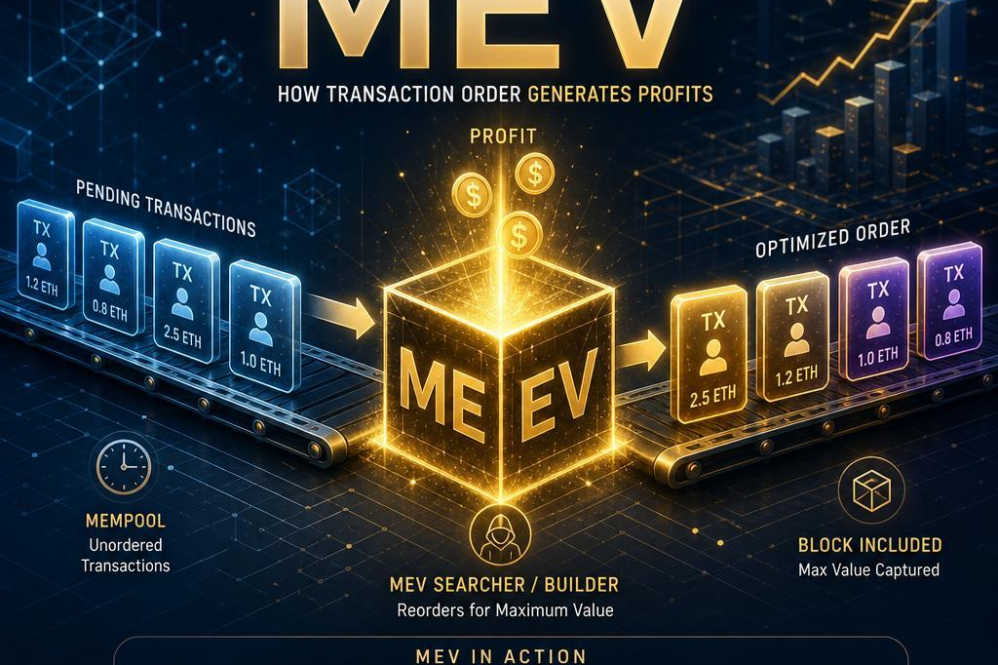
Introduction to Miner Extractable Value and Its Impact on Blockchain Ecosystems
Miner Extractable Value (MEV) represents the additional profit that miners, validators, or block producers can gain by selectively including, excluding, or reordering transactions within a block. This phenomenon arises from the unique transparency of blockchain transaction pools, where pending transactions are visible before confirmation. By strategically exploiting transaction order, actors can capture arbitrage opportunities, front-run trades, or even extract value from liquidations, often yielding substantial returns beyond standard block rewards and transaction fees.
MEV’s influence extends beyond individual profit motives, shaping the broader blockchain ecosystem in profound ways. It impacts network fairness and user experience as some traders benefit disproportionately from transaction ordering while others face slippage or failed transactions. This selective ordering can also increase network congestion and gas prices and provoke complex bidding wars called “priority gas auctions,” where users compete to have their transactions prioritized, inflating costs for all participants.
Key mechanisms that generate MEV include:
- Front-running: Taking advantage of pending transactions to execute profitable trades immediately before them.
- Back-running: Executing transactions immediately after profitable trades to capture subsequent gains.
- Sandwich attacks: Placing both a buy and a sell order around a target transaction to manipulate prices.
| MEV Strategy | Description | Impact |
|---|---|---|
| Front-running | Executing trades before known pending orders | Potentially erodes trust; raises transaction costs |
| Back-running | Capitalizing on effects of recent trades | Increases volatility and market unpredictability |
| Sandwich Attacks | Manipulating transactions around a target trade | Leads to unfair price slippage for users |

Mechanisms Behind Transaction Ordering and Profit Generation
At the core of MEV (Miner Extractable Value) lies the strategic manipulation of transaction ordering within a block. Miners, block producers, or validators possess the unique ability to choose which transactions are included and the order they appear. By carefully reordering, inserting, or even censoring transactions, these actors can tap into arbitrage opportunities, front-run large trades, or perform sandwich attacks-all of which translate directly into measurable profits.
The mechanisms employed harness the inherent latency and transparency of blockchain mempools-public pools of pending transactions. Skilled actors monitor these mempools to identify lucrative trades before they are finalized on-chain. By placing their own transactions ahead, or strategically rerouting others, they capitalize on price discrepancies across decentralized exchanges or other DeFi protocols. This sophisticated timing and ordering create a landscape where even fractions of a second can mean substantial gains.
Common Techniques Driving MEV Profits include:
- Front-Running: Executing a transaction immediately before a known large trade to profit from the anticipated price movement.
- Back-Running: Placing transactions immediately after large trades to capture residual value changes.
- Sandwich Attacks: Surrounding a victim’s transaction with buy and sell trades to manipulate asset prices temporarily.
- Transaction Reordering: Reorganizing the sequence for optimal arbitrage between differing liquidity pools.
Below is a simplified example outlining potential profit impact from reordering block transactions:
| Transaction Type | Order Before | Order After | Estimated Profit Impact |
|---|---|---|---|
| Arbitrage Entry | 4 | 1 | $150 |
| Large Swap | 2 | 2 | – |
| Arbitrage Exit | 5 | 3 | $200 |
Understanding these mechanisms sheds light on how the subtle art of ordering transactions not only influences the integrity of decentralized networks but also creates a lucrative revenue stream in the rapidly evolving blockchain ecosystem.
Analyzing Different Strategies for Capturing MEV Opportunities
Capturing MEV opportunities demands a comprehensive understanding of transaction sequencing and its exploitation within block production. Front-running is one of the most widely recognized strategies, where a bot detects a pending transaction and places its own transaction just before it to capitalize on the price impact. This requires rapid monitoring of mempool activity and swift gas fee adjustments to ensure priority execution. However, front-running can often lead to increased transaction costs due to bidding wars on gas fees.
Another highly effective tactic is the sandwich attack, which involves placing one transaction immediately before and one immediately after a victim’s trade. By manipulating the asset’s price during the victim’s transaction, the attacker can generate a profit from the price slippage caused. This method leverages timing precision and detailed knowledge of decentralized exchange mechanics to extract value, but it can also increase the risk of detection and countermeasures.
Advanced participants increasingly turn to back-running, where their transaction follows a large trade to take advantage of the resulting market movement. This can involve executing arbitrage strategies or liquidations triggered by the initial trade. Back-running typically requires sophisticated algorithms and capital readiness but is less aggressive than front-running, sometimes allowing for cleaner profit extraction with reduced network conflict.
| Strategy | Execution Point | Primary Benefit | Potential Drawback |
|---|---|---|---|
| Front-running | Before victim’s tx | Immediate profit from price movement | High gas fees, auction battles |
| Sandwich Attack | Before & after victim’s tx | Exploits slippage for higher gains | Risk of detection, ethical concerns |
| Back-running | After victim’s tx | Capitalize on market reactions | Complex, requires advanced tech |
Effective MEV capture also involves priority gas auctions (PGAs) where bots dynamically adjust their transaction fees to increase the likelihood of block inclusion in their preferred order. This constant bidding for priority demands real-time intelligence and often leads to inflated network fees, impacting the overall ecosystem. Additionally, some MEV seekers deploy private transaction relays to bypass the public mempool, reducing competition and front-running risk but requiring trusted infrastructure.
Risks and Ethical Considerations in Exploiting MEV
Exploiting Maximal Extractable Value (MEV) presents significant risks that extend beyond financial loss, impacting the integrity of blockchain ecosystems. One primary concern is the potential for front-running and sandwich attacks, where bots manipulate transaction ordering to extract value at the expense of ordinary users. This manipulation can lead to worsened trade execution prices, increased transaction fees, and diminished user trust in decentralized finance (DeFi) platforms.
Ethically, the pursuit of MEV raises critical questions about fairness and transparency in permissionless networks. While MEV extraction is technically permissible, it exploits asymmetries in transaction visibility and ordering, effectively prioritizing profit for a few at the cost of many. This selective ordering can undermine the principle of equal access-an essential tenet of decentralized systems-by allowing sophisticated actors to gain unfair advantages through transaction reordering.
Mitigating these risks requires a multifaceted approach involving both protocol-level solutions and community awareness. Techniques such as transaction privacy enhancements, fair ordering protocols, and MEV-aware block builders seek to reduce exploitative behaviors, but they must balance security with network performance. Educating users on the dangers of malicious MEV practices also empowers them to make informed decisions and adopt safer transaction strategies.
| Risk Factor | Impact | Mitigation |
|---|---|---|
| Front-Running | Worsened execution price | Privacy-preserving transactions |
| Sandwich Attacks | Loss of capital for traders | Fair ordering protocols |
| Network Congestion | Higher gas fees | Optimized block propagation |
| Market Manipulation | Reduced trust | Transparency tools and audits |
- Transparency: Essential for maintaining a fair market and informed participants.
- Equity: Ensuring that no single actor disproportionately benefits from transaction sequencing.
- Security: Protecting users from exploitative MEV strategies through robust protocol design.
- Accountability: Raising awareness about the consequences of MEV extraction on broader network health.
Best Practices for Developers to Mitigate Negative Effects of MEV
Developers must prioritize transparency in transaction ordering mechanisms within smart contracts to curtail exploitable frontrunning opportunities. Incorporating randomness or commit-reveal schemes can obscure transaction sequencing from potential MEV extractors, reducing their ability to predict and manipulate the order for profit. Additionally, designing contracts that minimize dependency on transaction order-by eliminating state changes conditional on prior transactions-helps defend against ordering-based value extraction.
Implementing robust gas price management is also critical. By dynamically adjusting gas fees or employing gas token strategies, developers can inhibit bots from consistently outbidding legitimate transactions to capture MEV opportunities. Encouraging users to adopt batch transactions or aggregated bundles through protocols like Flashbots further diminishes the surface for competitive ordering exploits.
Adhering to these best practices enhances network fairness and user experience:
- Use commit-reveal schemes to hide transaction intents temporarily.
- Incorporate randomization in transaction execution order.
- Design contracts without strong dependency on transaction sequencing.
- Adopt gas fee mechanisms that discourage frontrunning bots.
- Leverage transaction bundling protocols to safeguard user operations.
| Practice | Benefit |
|---|---|
| Randomized Ordering | Reduces predictability of transaction sequence |
| Gas Fee Controls | Limits transaction frontrunning |
| Commit-Reveal Schemes | Hides transaction intent temporarily |
| Transaction Bundling | Prevents MEV bot front-running |
Future Trends and Innovations in MEV Management and Regulation
As blockchain ecosystems continue to evolve, the management of Maximal Extractable Value (MEV) has become a pivotal focus for developers, users, and regulators alike. One emerging trend is the integration of transparent sequencing protocols that aim to reduce the negative externalities of MEV extraction while preserving network efficiency. These protocols leverage cryptographic commitments and fair ordering guarantees to minimize opportunistic reordering that leads to front-running or sandwich attacks, enhancing transaction fairness without compromising throughput.
On the regulatory front, there is a growing push to develop frameworks that treat MEV not merely as a technical byproduct but as a financial risk factor subject to oversight. This includes proposals for imposing stricter disclosure requirements on entities engaging in MEV extraction and for monitoring bot activities that exploit transaction ordering. Regulators are also exploring cooperative models where miners, validators, and users agree on standardized practices to curb manipulative behaviors without stifling innovation.
Innovations in MEV mitigation tools continue to gain traction, especially with the rise of decentralized MEV auctions and commit-reveal schemes. These mechanisms aim to democratize MEV profits by allowing users to bid transparently for preferred transaction ordering or to bundle transactions in a way that prevents harmful extraction tactics. The adoption of such mechanisms signals a shift towards more equitable and user-centric ecosystems where the profit from transaction ordering is distributed fairly rather than monopolized by a few actors.
| Innovation | Benefit | Implementation Status |
|---|---|---|
| Transparent Sequencing | Reduces front-running | Experimental |
| Regulatory Disclosure | Increases market transparency | Under Discussion |
| Decentralized MEV Auctions | Democratizes MEV profits | Pilot Programs |
| Commit-Reveal Schemes | Prevents sandwich attacks | Early Adoption |
Looking ahead, a collaborative approach combining technological innovation with prudent regulation is likely to define effective MEV management. This synergy will strive to balance the inherent incentives of decentralized systems with protections that guard end-users from exploitative practices. By fostering transparency, accountability, and equitable profit-sharing, the blockchain community can transform MEV from a source of risk into an opportunity for sustainable network improvement.


