
Bridging the Gap Safely: Navigating Hacks and Smart Contract Risks
Smart contracts offer efficiency, but they’re not immune to hacks. Safeguarding your digital agreements demands vigilance and a robust understanding of potential vulnerabilities.

Ethereum
Smart contracts offer efficiency, but they’re not immune to hacks. Safeguarding your digital agreements demands vigilance and a robust understanding of potential vulnerabilities.
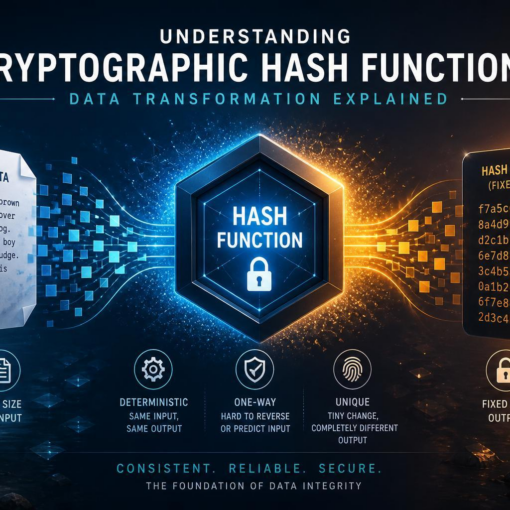
Cryptographic hash functions are essential tools in cryptography, transforming data into a fixed-size string that ensures data integrity and security through unique, irreversible outputs.

Flashbots is a project aiming to ensure fair and transparent capture of Miner Extractable Value (MEV) for block producers in the Ethereum ecosystem. It addresses the challenges of centralization and fairness in mining rewards.

Oracles play a crucial role in the blockchain ecosystem by connecting real-world data with smart contracts, ensuring these self-executing agreements can operate based on accurate external information.

In the cryptocurrency world, Ethereum-based stablecoins like USDC, DAI, and USDT dominate, offering price stability in volatile markets. These tokens are essential for traders and investors alike.
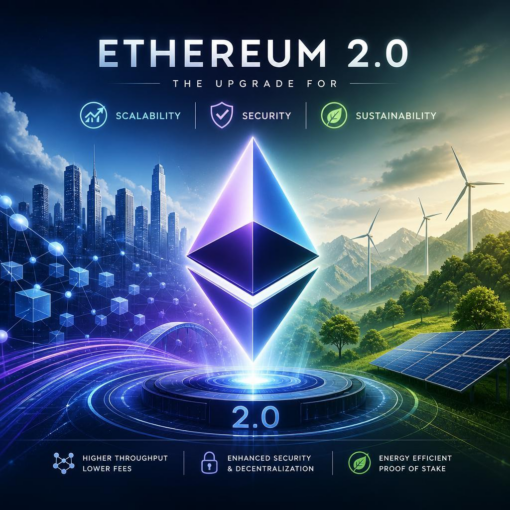
Ethereum 2.0 marks a pivotal shift, enhancing scalability, security, and sustainability through a transition to a proof-of-stake model and sharding. This upgrade ushers in a new era for the Ethereum network.

Staking Ethereum can yield about 3 to 5 percent annually. This return varies based on network conditions but offers a predictable income stream for token holders.

EIP-1559 introduced a new fee mechanism to Ethereum, burning part of the transaction fees. This alters the economic dynamics, reducing the circulating supply and potentially boosting ETH’s value-though its long-term effects remain to be seen.
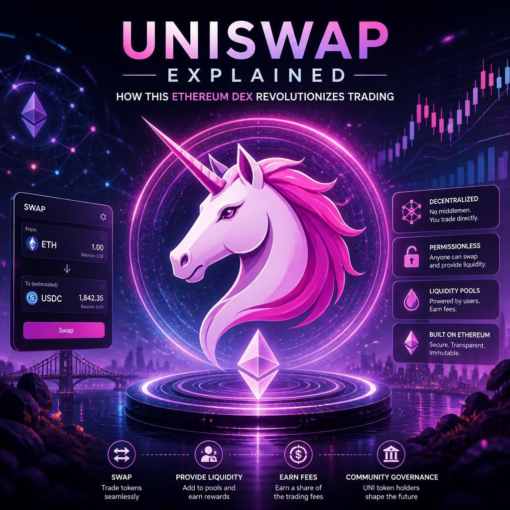
Uniswap, an Ethereum-based decentralized exchange (DEX), transforms trading by eliminating the need for traditional order books and introducing automated market-making, democratizing liquidity and access to financial markets.

Restaking 101: Learn to maximize your staked ETH across different protocols without locking it up permanently, diversifying your crypto portfolio effectively.