
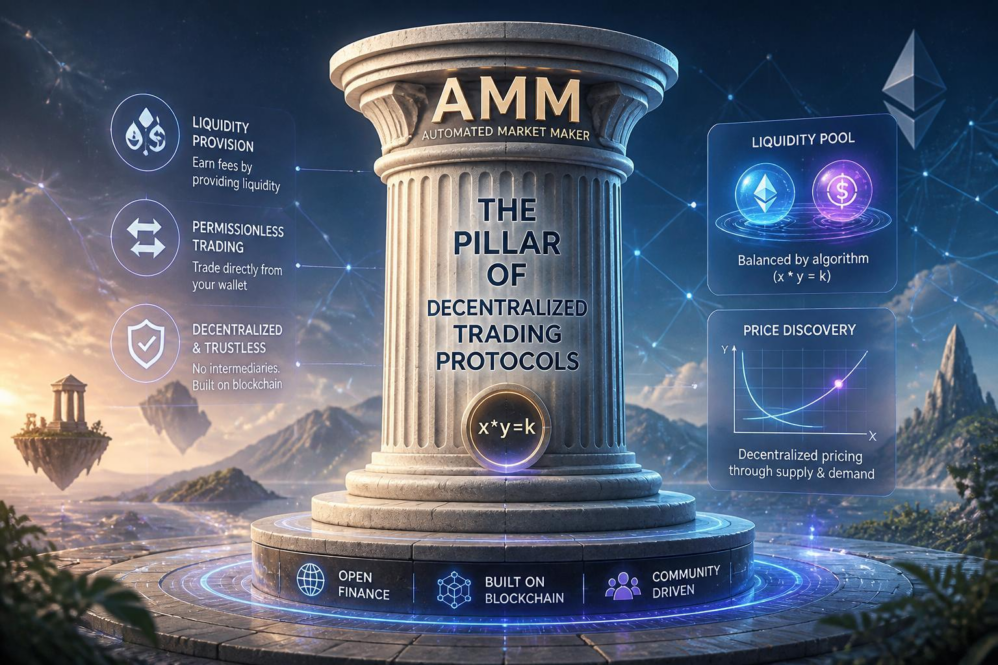
The Role of automated Market Makers in Decentralized Finance
Automated Market Makers (AMMs) have become a cornerstone in the realm of decentralized finance (DeFi), revolutionizing how tokens are traded on blockchain platforms. By automating the process of market making, AMMs enable users to trade without relying on traditional order books or centralized exchanges. This decentralization allows for a more democratic and accessible trading surroundings, where anyone with an internet connection can partake in financial activities without the need for middlemen or large amounts of collateral.
In an AMM system, a liquidity pool is maintained by a community of users who deposit pairs of tokens. This liquidity pool serves as the backbone of the system, allowing for continuous trading 24 hours a day, seven days a week. The system uses an algorithm to adjust the prices of tokens based on supply and demand within the pool. This mechanism ensures that traders can conduct transactions at any time, without the complications that arise from waiting for orders to be matched on an order book. The beauty of AMMs lies in their simplicity and their ability to function without the need for constant human intervention, demonstrating the power of automated systems in finance.
One of the key benefits of AMMs is the reduced risk of market manipulation and the associated volatility. Traditional exchanges may suffer from sudden price swings due to large trades or low liquidity. However, AMMs smooth out these fluctuations by automatically adjusting prices according to the volume of trades. This keeps the market relatively stable, even during periods of high activity. Another significant advantage is the ease of entry for new users. There are no complex sign-up processesand minimal knowledge of market mechanics is required to start trading. All one needs is a compatible wallet and an understanding of the basic rules of the platform.
To further illustrate the mechanics of an AMM, consider a simple example using two tokens, Token X and Token Y. Users can deposit both tokens into a liquidity pool, and the system automatically sets the price of Token X in terms of Token Y based on the ratio of their deposits. When a trader wants to buy Token X using Token Y, they must make a trade with an additional fee to compensate the liquidity providers who maintain the pool. This ensures that both buyers and sellers can conduct trades seamlessly, contributing to the robust ecosystem. In this way, AMMs not only democratize access to financial markets but also ensure that liquidity is always available, creating a more resilient and accessible financial infrastructure.
| Token | Liquidity | Price |
|---|---|---|
| Token X | 1000 | $1.00 |
| Token Y | 1000 | $1.00 |

How AMMs Maintain Liquidity and Ensure Price Stability
At the heart of every decentralized finance (DeFi) ecosystem lies the Automated Market Maker (AMM), a unique protocol that allows for continuous trading without the traditional limitations of order books. One of its most critical functions is maintaining liquidity, which is essential for ensuring that trades can occur seamlessly and prices remain stable. amms achieve this by incentivizing liquidity providersor LPs, to deposit assets in liquidity pools. These pools are often composed of equal values of two tokens, thus maintaining a balanced liquidity reserve. By depositing large amounts of tokens, LPs earn trading fees and other rewards, such as newly minted tokens from the platform.
Another vital aspect of AMMs is the implementation of a pricing mechanism called the Constant Product Market Maker,or x (*) y (=) k formula. This formula ensures that the product of the token balances in a pool always remains constant. For example, if one token’s supply increases, the other’s must decrease proportionally to keep the equation’s balance. This automatic adjustment of token prices promotes price stability and prevents extreme fluctuations that could disrupt the market. While simple in concept, the math behind it is indeed crucial for sustaining a healthy trading environment that supports both small and large transactions alike.
To further illustrate , let’s consider an LP who deposits an equal value of token A and token B into a liquidity pool. As trades occur, the ratio of these tokens may begin to shift. however, the constant product formula ensures that the pool adapts to maintain balance, effectively charging a fee for each trade proportional to the change in token ratios. this fee acts as a safeguard against arbitrage and ensures that the price found within the AMM accurately reflects the underlying market conditions.
Along with these mechanisms, some AMMs also incorporate specific features such as dynamic fees or rebates for lps, further incentivizing liquidity provision. One can imagine a scenario where a platform might reduce the trading fee for a particular pair during periods of high trading volume to encourage LPs to deposit more tokens and help stabilize prices. This creative approach demonstrates how AMMs can evolve to adapt to different market conditions while maintaining their core functionalities. By constantly iterating and refining these practices,AMMs continue to play a pivotal role in the future of decentralized trading.
Optimizing trading strategies on AMM Protocols
When it comes to optimizing trading strategies on Automated Market Maker (AMM) protocols, understanding the core mechanics of liquidity provision and fee structures is essential. AMMs rely on pools of assets to execute tradesand the way these pools are structured can significantly impact trading efficiency and profitability. for instance, liquidity providers (LPs) can strategically allocate assets to pools based on anticipated trading volume and price volatility. By analyzing historical data and current market trends, traders and LPs can make informed decisions about which pools to focus on.
A critical aspect of optimizing trading strategies on AMMs involves understanding the relationship between liquidity and slippage. slippage occurs when there is a significant difference between the expected trading price and the actual market price due to low liquidity. To mitigate this, traders can use smaller trade sizes or select less congested trading pairs. traders might consider using decentralized exchanges (DEXes) that allow for multi-hop trades, which can often improve liquidity and reduce slippage for large trades.
Another factor to consider when optimizing trading strategies on AMMs is the dynamic fee structure. Different AMMs offer varying fee models that can influence trading costs and, consequently, profitability. One approach is to identify AMMs that offer better terms for high-volume traders or those that provide incentives for long-term liquidity provision. For example, some exchanges might offer lower trading fees for certain time periods or bonuses for maintaining liquidity in crucial trading pairs. Analyzing these factors allows traders to choose the most cost-effective platforms for their strategies.
To further enhance trading strategies, traders can also employ arbitrage opportunities across different amms. Arbitrage involves taking advantage of price discrepancies between exchanges to secure profits. This approach requires a sophisticated understanding of the market and the ability to act quickly. traders may use liquidity management tools that help automate the process of optimizing and allocating liquidity across multiple pools. These tools can provide real-time data analytics and insights, allowing traders to make informed decisions swiftly and efficiently. Below is an example of how a simple arbitrage trade might be structured in a table format, highlighting the differences in price and potential profit margins across different AMMs.
| AMM | Trading Pair | Offering Price | Expected Price | Potential Profit Margin |
|---|---|---|---|---|
| Uniswap V3 | ETH/USDC | $1,500 | $1,510 | $10 |
| sushiswap | ETH/USDC | $1,495 | $1,505 | $10 |
In summation, mastering the nuances of AMM protocols can unlock significant opportunities for traders. By focusing on liquidity management, understanding the fee structuresand leveraging arbitrage strategies, traders can significantly enhance their profitability in the decentralized finance (DeFi) market.
Evaluating Risks and Challenges in AMM Ecosystems
As the backbone of decentralized finance (DeFi) ecosystems,Automated Market Makers (AMMs) offer an innovative trading model that challenges the traditional order book exchange paradigm.However, this revolutionary approach introduces its own set of risks and challenges that users and developers must carefully consider. The most pronounced among these is the issue of impermanent loss, a phenomenon that occurs when liquidity providers (LPs) experience a decrease in their capital due to price fluctuations in the tokens they hold as liquidity in an AMM. In simpler terms, impermanent loss means that LPs may loose value relative to the scenario of simply holding the tokens outside the AMM.
Beyond the financial risk of impermanent loss, the inherent transparency and decentralization of AMMs also attract the attention of regulatory bodies. With the absence of a central intermediary to manage legal and compliance aspects, developers and users face the challenge of navigating a rapidly evolving regulatory landscape. This complex scenario is further compounded by the legal void that often characterizes emerging technologies, leaving room for potential conflicts and liabilities.
Scalability and security are also critical issues within the AMM ecosystem. As the demand for decentralized trading platforms grows, maintaining high performance and reliability while ensuring that the system remains immune to hacking and fraud becomes increasingly tough. The robustness of an AMM largely depends on the quality of its underlying smart contracts, which must be thoroughly audited to prevent vulnerabilities and exploits. The table below provides a quick comparison of the primary risks associated with AMM platforms.
| Risk Factor | Description |
|---|---|
| Impermanent Loss | Decrease in capital due to price volatility of pooled tokens. |
| Regulatory Compliance | navigating an evolving legal landscape with minimal guidance. |
| Security Vulnerabilities | Risk of hacking and fraud due to poorly audited smart contracts. |
Addressing these challenges requires a multifaceted approach. Developers should prioritize the security and efficiency of their smart contracts, continuously monitoring and improving the system for vulnerabilities.the establishment of clear legal frameworks-through collaboration with regulatory bodies-can help to mitigate the risks posed by regulatory uncertainty. engaging with the broader community can also provide insights and support in managing these complex issues, thereby fostering a more resilient and lasting AMM ecosystem.
Best Practices for Participating in AMM Markets
Participating in automated market maker (AMM) markets requires a keen understanding of the nuances that come with this type of trading. In traditional order book exchanges, liquidity is provided by market participants submitting buy and sell orders. In contrast, AMMs create liquidity through smart contracts that automatically match trades based on predefined formulas. This automated creation of liquidity makes AMMs incredibly attractive, but also demands users to adhere to certain best practices to maintain the integrity and efficiency of the market.
One of the primary rules of engaging with AMMs is to understand the inherent slippage and impermanent loss risks. Impermanent loss occurs when the price of a token pair fluctuates while it’s locked in an AMM pool; this can led to a scenario where holding tokens outside of the pool would yield more tokens than being a liquidity provider. To mitigate impermanent loss, it’s wise to choose stablecoin pairs, which are less volatile. Another strategy is to diversify your liquidity provision to several pools, rather than concentrating funds in a single pair. This diversification can spread risks and possibly increase your earnings from trading fees.
Another critical best practice is to stay informed about the governance and risk management features of the AMM platform you intend to use.Many AMMs allow token holders to vote on governance proposals,such as changes to fees or protocols within the platform. Engaging in these discussions and familiarizing yourself with the rules and safeguards can provide you with a deeper understanding of how the platform operatesand how it might affect your investment.Moreover, platforms that use community-driven governance tend to promote healthier, more sustainable ecosystems.
To ensure that you’re participating in AMMs under safe conditions, it’s essential to have a clear protocol for security and risk assessment. This includes using secure wallets compatible with the platform’s tokens, setting up two-factor authentication for accountsand regularly reviewing the smart contracts to identify potential risks. A well-rounded approach can be summed up in a simple checklist:
| Items to Check |
|---|
| Compatibility of wallet with the AMM’s tokens |
| Activation of 2FA for accounts |
| Review of smart contracts for any vulnerabilities |
Following these foundational steps will help you navigate the complexities of AMM markets with a higher degree of confidence and control.


