
Smart Contracts Unveiled: Understanding the Technology Behind Self-executing Agreements
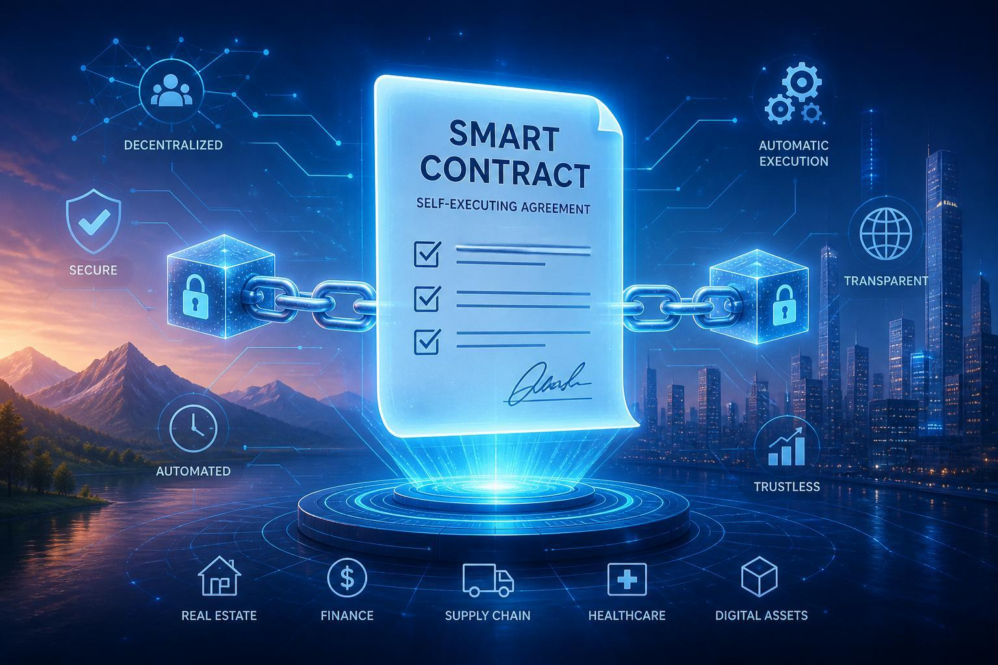
Smart contracts are a groundbreaking feature of blockchain technology that have the potential to revolutionize industries by eliminating the need for intermediaries in transactions and agreements. Unlike traditional contracts that require enforcement by third-party authorities like courts and legal systems, smart contracts are self-executing and automated, carrying out the terms of the agreement directly on the blockchain. These contracts are programmed wiht code that defines the specific conditions under which transactions occur, ensuring openness and security. When the pre-established conditions are met, the smart contract automatically processes and verifies the transaction without the need for human intervention. This automation not only speeds up the process but also reduces the risk of fraud and errors, making it a powerful tool for trustless environments.
One of the key benefits of smart contracts is their transparency and accessibility on the Ethereum blockchain. Anyone can track the transactions and changes recorded by a smart contract, thanks to the public nature of the ledger. However, while the interactions and outcomes of a smart contract are open to scrutiny, the identities of the parties involved remain private. This means that you can verify whether a payment was made to your address without revealing who the sender is,thus balancing privacy and accountability. This feature is particularly appealing in a world where data privacy is increasingly significant.
To understand how smart contracts operate, it helps to consider how end users interact with them. Transactions that users send to a smart contract are essentially commands that trigger specific actions based on the contract’s code. For example, a transaction can be as simple as sending funds to an address controlled by the smart contractor it can involve complex actions such as releasing funds based on the fulfillment of certain conditions. Since these contracts are essentially programs running on a blockchain, they are capable of storing any kind of details and performing various functions, such as invoking other contracts or storing data. This versatility is what makes smart contracts so versatile and applicable to a wide range of industries.
| Function | Example |
|---|---|
| Simplified view of Smart Contract capabilities | |
| Execute payments | Release funds upon meeting certain conditions |
| Store data | Record votes in a decentralized voting system |
| Invoke other contracts | Lend out assets upon receiving collateral |
Smart contracts are not just theoretical; they are being deployed and used for a variety of purposes today. As the technology matures and becomes more widespread, we can expect to see innovative applications that push the boundaries of what is absolutely possible in the digital world. From financial derivatives to real estate transactions, smart contracts are set to play a vital role in the future of automated agreements and beyond.
From Theory to Practice: Real-World Applications of Smart Contracts across Industries
Smart contracts, initially a theoretical concept, are rapidly transforming into tangible applications across various industries.Financial institutions,as a notable example,have pioneered the use of smart contracts to automate and secure financial transactions. By embedding terms and conditions of a financial agreement directly into code, these contracts can execute payment transfers or enforce loan repayments once predefined criteria are met. This not only reduces the risk of fraud but also minimizes the need for intermediaries.
In the legal sector, smart contracts offer a new paradigm for drafting and executing agreements. They allow for the creation of self-enforcing contracts that can be triggered by specific conditions set by the parties involved. This includes everything from real estate transactions to the issuance of digital certificates. One innovative use case is in intellectual property management, where smart contracts can enforce licensing terms and automatically distribute royalty payments.This not only simplifies compliance but also ensures transparency and reduces the likelihood of disputes.Beyond finance and legal, the logistics and supply chain industry is also embracing smart contracts to enhance operational efficiency. By integrating smart contract technology with IoT devices, companies can track the movement of goods in real time and automatically adjust inventory levels. This could involve everything from verifying temperature-controlled conditions during transportation to automatically updating stock levels in warehouses once deliveries are received.Such applications simplify operations and provide real-time accountability,reducing the margin for error and ensuring that all parties are on the same page.
Moreover,the entertainment industry is exploring the potential of smart contracts for rights management and payment distribution. Musicians, filmmakersand other content creators can use smart contracts to manage copyright and royalties. For example, a musician could release a song with a smart contract embedded in the metadata, setting out the terms for distribution and compensation. As soon as a listener streams the song or an artist covers it on their platform, the contract automatically distributes the appropriate payments, ensuring that all parties are fairly compensated and minimizing legal tangles. This system is both fair and efficient, fostering innovation and creativity by removing the friction from monetization processes.
| Industry | Application | Benefit |
|---|---|---|
| Finance | Automating financial transactions | Reduces risk and minimizes intermediaries |
| Law | Self-executing agreements in legal frameworks | Ensures compliance and reduces disputes |
| Logistics | Inventory management and tracking | Improves efficiency and ensures accountability |
| Entertainment | Rights management and payment distribution | Supports fair compensation and fosters creativity |
Decentralization and Transparency: How Smart Contracts Enhance Trust in Transactions
At the heart of smart contracts lies the principle of decentralization. By eliminating the need for intermediaries, smart contracts facilitate a more democratic and trustless habitat where participants can transact directly with one another without the overhead of traditional legal systems. This decentralization is a cornerstone of blockchain technology, which serves as the backbone for executing these self-executing agreements. The removal of central authorities not only reduces potential points of failure but also lowers transaction costs significantly. Each transaction is transparent and traceable on the blockchain, ensuring that all parties can verify the status of their agreements and the execution of transactions without the need for third-party audits.
The transparency aspect of smart contracts is particularly noteworthy. every change or execution is recorded immutably on the blockchain, making it visible to all participants. This level of visibility means that the integrity and fairness of transactions are heightened, as there’s no room for hidden agendas or conflicts of interest. Any alterations or deletions aimed at fraud are nearly impossible on a blockchain due to its distributed nature.Participants can rest assured that once a transaction occurs, it is documented forever, ensuring accountability and reliability.
To illustrate how this transparency bolsters trust, consider the execution of a rent agreement where funds transfer requires certain conditions to be met. The smart contract,once deployed on the blockchain,cannot be altered without consensus from all involved parties. Table 1 below provides a simplified example of how a rent agreement might be structured using a smart contract, highlighting the immutable rules that govern fund release and the transparent process of audit and oversight.
| Step | Functionality | outcome |
|---|---|---|
| 1 | Tenant pays rent to the landlord | Automatically logged on the blockchain |
| 2 | Security deposit is held in escrow | Guaranteed release upon mutually agreed terms and conditions |
| 3 | Automated inspection and verification process | Transparent, impartial assessment of property condition |
The final piece that consolidates the trust in smart contracts is their predictable nature. Since these agreements are coded to execute automatically when predetermined conditions are met,there’s little room for human error or discretion. This predictability acts as a security measure, ensuring that the terms of a contract are always respected and executed as programmed. Consequently, trust in the system is bolstered not only by its transparency and decentralization but also by its reliability. Every transaction follows the same rules laid out in the code, fostering an environment of consistency and fairness.
Security and immutability: Navigating Challenges and Mitigating Risks in smart Contract implementation
the conversation inevitably turns to security-arguably the most critical aspect of these self-executing agreements. After all, the integrity and trustworthiness of a smart contract hinge on its ability to resist external and internal threats. Developers must be vigilant about protecting against attacks such as phishing, 51% attacks, Sybil attacks, and many more. These threats can compromise the integrity of a blockchain network, leading to potential financial loss and reputational damage for users and platforms alike.
A common concern in the realm of smart contracts is immutability. Once a transaction is recorded on a blockchain and a smart contract is executed, those actions cannot be reversed or altered.This characteristic ensures transparency and reliability but also poses risks, particularly if the contractual logic contains bugs or vulnerabilities. Ensuring that smart contracts are correct from the outset is crucial, as fixing issues post-execution can be extremely challenging. Developers can mitigate this risk by conducting thorough formal verification and rigorous testing before deployment. However, it’s also important to design contracts with potential fallback mechanisms in case of unforeseen anomalies.
Implementing robust security measures requires an understanding of the common pitfalls and best practices. For instance, developers should avoid common coding errors such as reentrancy, front-runningand gas limit vulnerabilities. Each of these issues can be exploited to drain funds or manipulate contract states. By adhering to established security guidelines and conducting peer reviews, much of the risk can be significantly reduced. integrating advanced security frameworks and leveraging audit services from reputable firms can provide an extra layer of protection.
To further illustrate the complexities of security in smart contract progress, consider the following table which outlines common vulnerabilities and their implications:
| Vulnerability | Description | Potential Impact |
|---|---|---|
| Reentrancy | Repeated calls to a function for funds withdrawal before a previous withdrawal is fully processed. | Can drain funds from the contract until depleted. |
| Front-Running | A miner exploits knowledge of pending transactions to their advantage. | Can alter order or timing of transactions to manipulate contract outcomes. |
| Phishing | Scammers trick users into sending funds or personal data. | Can lead to financial loss and damage to user trust in the platform. |
Each of these vulnerabilities underscores the necessity for meticulous planning and execution in smart contract development.By proactively addressing security concerns, developers can ensure that their smart contracts not only execute seamlessly but also safeguard user interests and maintain the integrity of the blockchain ecosystem.
Optimizing Efficiency: Leveraging Smart Contracts for Cost Reduction and Process Automation
Smart contracts represent a transformative shift in how business processes are managed and executed, capable of automating transactional tasks with a precision that traditional paper-based systems can’t match. By converting legal agreements into executable code, these digital contracts ensure that terms and conditions are enforced automatically without the need for manual oversight.This automation not only speeds up transaction times but also reduces the risk of human error and fraud significantly. The efficiency gains can be measured in real-time, thanks to the transparency and immutability of the underlying blockchain technology.
To understand the potential cost savings,consider a typical supply chain scenario. With smart contracts, suppliers, manufacturers, and retailers can be linked in a single, transparent network. This interoperability allows the system to automatically adjust inventory levels, issue payment upon deliveryand manage contracts based on predefined conditions. This approach eliminates the need for intermediaries and the associated overhead costs, thus directly translating into savings.Moreover, transactional delays and disputes are minimized, as all parties can access the same, tamper-proof ledger.
When setting up a smart contract, meticulous planning is essential. the contract must be specific, measurable, achievable, relevant, and time-bound – adhering to the SMART principle . For instance, a contract might stipulate that payment should be made to a supplier 30 days after the delivery of a specified quantity of goods. This clarity helps prevent misunderstandings and ensures that the contract functions as intended. A well-drafted smart contract can also include clauses that trigger automatic penalties or bonuses based on performance metrics, further enhancing its utility as a tool for accountability and efficiency.
| Aspect | Impact |
|---|---|
| Reduction of Manual Processes | Decreased operational costs |
| Enhanced Contract Compliance | Lower risk of disputes and penalties |
| Automated Payment and delivery Tracking | Improved cash flow management |
the benefits extend beyond just cost reduction.Smart contracts enable a new level of process automation,where entire workflows become more fluid and responsive. This is particularly favorable in industries with complex regulatory environments or those that require rapid transaction processing. By automating compliance and auditing, smart contracts can provide a level of assurance that meets or exceeds regulatory requirements, ensuring that businesses can focus on growth rather than compliance challenges.
Future Prospects: Exploring the Expanding Role of Smart Contracts in Shaping Legal and Business Landscapes
As the digital world continues to evolve, the role of smart contracts in legal and business landscapes is poised for significant expansion. These self-executing agreements are slowly but surely moving beyond the confines of blockchain technology to integrate with a broader array of systems and networks. This expansion opens new possibilities for automating and securing transactions across diverse industries.
Legal professionals are already taking notice of these changes, recognizing the potential for smart contracts to reduce disputes and litigation costs. By embedding the terms and conditions of agreements directly into code, these digital tools ensure that contracts are executed automatically once all conditions are met, thus reducing the room for human error or misconduct.Consequently,businesses can increasingly rely on smart contracts to manage routine transactions,freeing up legal teams to focus on more complex issues that require human insight and decision-making.
Moreover, as smart contracts become more sophisticated, they are likely to handle a wider range of complex legal and financial scenarios. This includes everything from insurance claim payouts to property transfers and even intricate financial derivatives trading. The ability to seamlessly integrate with existing financial and legal systems could make smart contracts a cornerstone of future business operations. This integration requires careful planning to ensure compatibility and security as these contracts venture into uncharted territory.
| Industry | Potential Application |
|---|---|
| Finance | automated trading and compliance |
| Real Estate | Land registry and smart property management |
| Insurance | Smart claims processing |
As these tools gain acceptance and refine their capabilities, the lines between digital and physical interactions will continue to blur. The future promises not just efficiency but also innovation, as businesses and developers push the boundaries of what is absolutely possible with smart contracts. This evolution reflects a broader trend towards more clever and automated systems, making smart contracts an essential part of the digital conversion of tomorrow.


