The Mechanics of Ethereum’s Burn Rate Explained
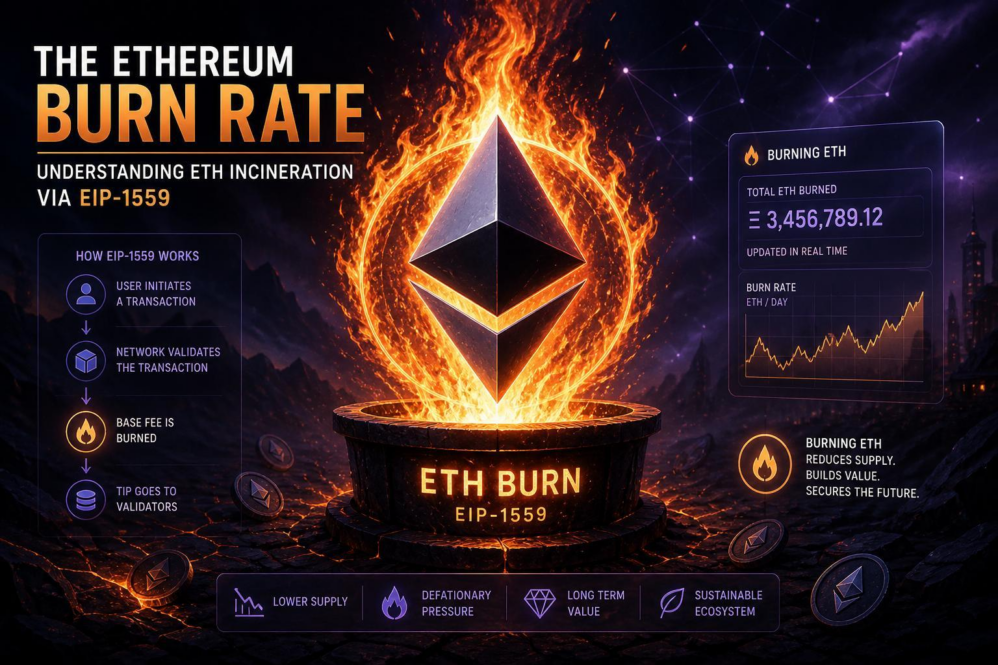
Ethereum’s burn rate is a interesting concept that has come to the forefront with the implementation of EIP-1559. this mechanism essentially ensures that a portion of newly minted Ethereum is removed from circulation rather than added. Every time a transaction occurs, the network estimates a base fee based on network congestion. If the transaction is included in a block, this base fee does not go to miners but is instead burned. This burning contributes to the overall supply reduction of ETH over time.
To understand how this works in practice, consider a scenario where network congestion spikes due to high activity during a major event. Users would naturally submit transactions with higher gas prices to have their transactions included faster. These higher gas prices result in more ETH being burned, which can led to increased scarcity and potentially higher value for ETH.
The burn rate isn’t static; it fluctuates based on demand and network congestion. When the network is less busy, the demand for transaction slots decreasesand thus the burn rate decreases. Conversely, when demand surges, more ETH gets burned due to higher fees. This dynamic system helps maintain a balance between the supply and the demand for ETH, reducing the risk of inflationary pressures during high-traffic periods.
To give readers a clearer picture of how the burn rate varies across different conditions, let’s look at a hypothetical table illustrating this concept. Below is an example that shows the effect of transaction numbers on the burn rate,assuming other conditions remain constant.
| Transaction Volume | Burn rate (ETH) |
|---|---|
| 500,000/day | 500/day |
| 1,000,000/day | 1,000/day |
| 1,500,000/day | 2,000/day |
| 2,000,000/day | 4,000/day |
This table demonstrates how increases in transaction volume can exponentially effect the burn rate, providing valuable insights into the economic dynamics of Ethereum’s EIP-1559.
Decentralized Governance and the Birth of EIP-1559
The birth of EIP-1559 was a landmark moment in Ethereum’s history, marking a notable shift towards a more decentralized and community-driven governance model. Before its inception, Ethereum’s fee structure was subject to frequent volatility, leading to unpredictable transaction costs and hampering the network’s usability for everyday users. The community rallied around the idea of a more equitable and stable fee mechanism, one that could be implemented through the collective consensus of developers and token holders.
As the debate around fee stability intensified, a group of developers, including Vitalik Buterin, took up the challenge of designing a solution that would address these issues without compromising the network’s security or scalability. The result was EIP-1559, a proposal that introduced a new mechanism for managing transaction fees on the Ethereum network. At the heart of the proposal was the concept of a base fee and a tip, which allowed for both a fixed cost and a variable component to handle network congestion efficiently.
While the technical details of EIP-1559 are complex, its core principle is straightforward: to eliminate the volatility of gas prices by implementing a fixed cost for transactions and a dynamic component to handle network congestion. This fixed elementor base fee, not only ensures that users have a predictable cost for their transactions but also sets a floor for fees, discouraging spam and other malicious activities on the network. The introduction of the base fee also meant that excess fees would be burned, rather than being awarded to miners. This concept, known as the eth burn, plays a crucial role in reducing the supply of ETH over time.
To facilitate the adoption and implementation of EIP-1559, the Ethereum community engaged in extensive discussions and iterative testing.The community-driven approach was vital to ensuring that all stakeholders’ interests were consideredand any potential issues were identified and addressed early on. This democratic process not only built trust among developers and users but also set a precedent for future governance decisions on the Ethereum network. By involving the broader community in the decision-making process, EIP-1559 exemplifies the power of decentralized governance in driving innovation and improving network health.
| Feature | description |
|---|---|
| Base fee | A fixed fee for transactions to ensure stability and predictability. |
| Tip | A variable component to manage network congestion and prioritize transactions. |
| Eth Burn | Surplus fees are destroyed, reducing the total supply of ETH over time. |
Analyzing the Impact of ETH Burn on Network Stability
when Ethereum adopted EIP-1559, it introduced a new mechanism for handling transaction fees, which has profound implications for network stability and the long-term health of the Ethereum ecosystem. This protocol changes how transactions are priced,shifting from a competitive auction model to a more predictable fee structure. The core of this change lies in the mechanism that “burns” a portion of the transaction fees, permanently removing ETH from circulation. This process not only helps manage network congestion but also ensures a deflationary aspect for ETH as the network’s use increases.
This burn rate has been a subject of significant scrutiny and debate within the blockchain community. Some participants are concerned about the long-term implications of reducing the supply of ETH, while others argue that the benefits to network stability outweigh these concerns. To put it into perspective,the burn rate can be calculated by observing the amount of ETH burned relative to the total number of transactions processed. Understanding the burn rate allows for a more nuanced view of how these changes are impacting both supply dynamics and user experience.
A key aspect of analyzing the burn rate involves looking at real-world data and trends. for instance, by comparing burn rates during periods of high transaction volume to those during less active times, one can assess how effective EIP-1559 is at stabilizing transaction costs. This analysis typically requires tracking multiple data points,such as daily transaction volumes,average gas prices,and the total ETH burned. Analyzing historical data in this manner provides valuable insights into the protocol’s performance and its effects on network stability.
To aid in this analysis, we can use a table to summarize some of the key data points and trends:
| period | Transactions | Gas Prices (avg.) | ETH Burned |
|---|---|---|---|
| Dec. 2024 | 1.5M | $50 | 1,500 ETH |
| feb. 2025 | 1.2M | $25 | 1,100 ETH |
while this data does not form a complete picture, it highlights the variability in the factors that affect ETH burns and network stability. Understanding these dynamics is crucial for developers, investors, and enthusiasts interested in the future of Ethereum.
Strategic Implications for Ethereum Holders and Miners
Ethereum’s EIP-1559 introduces a significant shift in how transaction fees are managed on the network, leading to a predictable burn rate of Ether (ETH). This burn rate, while beneficial for overall ETH scarcity and potentially price stability, demands careful strategic thinking from both holders and miners. For holders, the impact is twofold: ETH burns contribute to a reduced supply, which could bolster token value over time. Though, the mechanism also implies a reduction in transaction fees, potentially lowering transaction costs for users. A miner’s perspective, conversely, includes adapting to the new fee model and finding alternative revenue streams since miners no longer receive all transaction fees.
Understanding this new landscape requires a nuanced approach, especially for long-term investments. Holders must consider the long-term effects of reduced supply against the short-term fluctuations in transaction costs. While the burn rate is a positive development,it does not guarantee price appreciation. Investors should stay informed about the overall market sentiment and technological advancements within the Ethereum ecosystem. Miners, meanwhile, need to explore opportunities beyond transaction fees. This might involve developing or investing in decentralized applications (dApps) and other Ethereum-native services.
One major change for miners involves the introduction of base fee burning, which means the primary revenue from fees decreases. To sustain profitability, miners will need to diversify their income streams. As an example, they could focus more on block rewards-which remain unchanged by EIP-1559-or shift towards infrastructure services. miners may wont to engage more closely with smart contract development and security services, given the strong correlation between dApps and Ethereum’s network growth.
| Income Source | Prior to EIP-1559 | Post EIP-1559 |
|---|---|---|
| Transaction fees | Primary revenue source | reduced, now mostly burned |
| Block Rewards | Secondary income | Potentially more attractive |
| Custom Services | Limited focus | Increasing focus |
As the network evolves, both holders and miners must adapt to the new economics introduced by EIP-1559.This shift is not merely about financial adjustments but about understanding the broader implications for the Ethereum ecosystem’s growth and stability. The burn rate is a tool to enhance the network’s efficiency and user experience, but it also necessitates proactive strategies from all participants to navigate these changes effectively.
Future Projections and Recommendations for Network Sustainability
As Ethereum continues to evolve, network sustainability becomes a paramount issue. With the introduction of EIP-1559, the network’s burn rate has significantly impacted the supply dynamics of ETH. future projections suggest continued volatility in the burn rate, which could lead to further ETH destruction, impacting the overall supply available for transactions and staking. The key to understanding this dynamic lies in dissecting the elements that control the burn rate and their potential future fluctuations. Developers and analysts will need to keep a close eye on metrics such as gas fees, network congestionand the adoption of Layer 2 solutions, which could alleviate pressure on the main network and stabilize burn rates. Monitoring these factors is crucial for predicting the future direction of ETH supply and price.
in the quest for lasting network operations, Ethereum developers are exploring various strategies to reduce network congestion and manage the burn rate effectively. One solution is the rollout of Layer 2 scaling solutions like Optimism and Arbitrum, which can handle a significant portion of transactions off the main network. These auxiliary networks are designed to improve transaction speeds and lower fees, potentially reducing the need for excessive gas fees and, consequently, the ETH burned. upgrades to the core Ethereum network itself could play a crucial role. As an example, the Ethereum 2.0 transition continues to progress, promising improvements in scalability, securityand sustainability.Such advancements could further stabilize the network conditions that influence the burn rate and supply dynamics of ETH.
It is essential to recognize that the burn rate’s impact extends beyond supply and demand economics; it also affects the broader ecosystem of Ethereum developers, usersand investors. As the network evolves, stakeholders must adapt to the changing landscape. This adaptation includes embracing new technologies, understanding the implications of protocol changesand engaging in community discussions to foster a resilient and sustainable network. the community must be vigilant and proactive in implementing solutions that address the challenges posed by the burn rate.Collaboration among developers, investorsand users is vital to ensure the health and growth of the Ethereum network moving forward.
To effectively plan for the future, the Ethereum community can benefit from adopting a strategic approach focused on research, innovationand community engagement. This includes continued investment in research and development to identify and implement efficient solutions, such as improved fee mechanisms and scaling technologies. fostering an open dialogue within the community helps in aligning the goals and efforts of various stakeholders. Through active collaboration and informed decision-making, the network can navigate the complexities of the burn rate and maintain a sustainable path forward. While challenges are unavoidable, the potential for a robust and scalable Ethereum network remains hopeful with the right strategies in place.


