
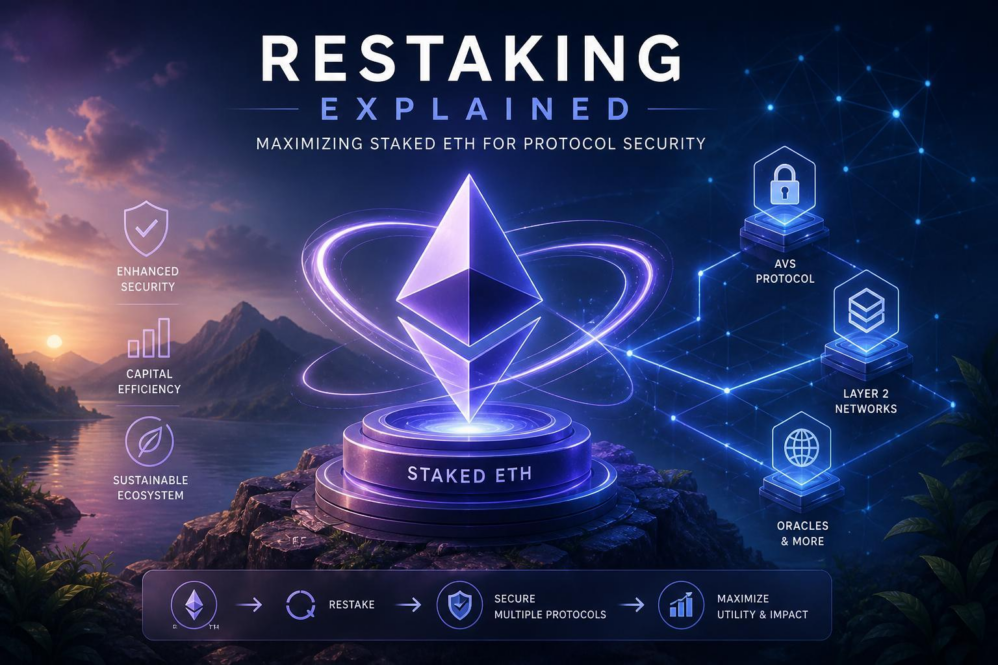
Restaking is a strategy that enables stakers to maximize their returns in teh Ethereum network. By choosing to restake, stakers redirect their rewards into participating further in the network’s consensus mechanism, ensuring a continuous cycle of support and growth. This process is akin to reinvesting profits in a buisness to foster expansion and increased profitability. Instead of withdrawing rewards and exposing oneself to market fluctuations or transaction fees, restaking allows for an uninterrupted flow of value generation.
The primary benefit of restaking is the compounding effect it has on staking rewards.Over time,the returns can grow exponentially as the initial stake accumulates rewards that are then staked back into the protocol.This organic growth is a key feature that differentiates restaking from traditional staking strategies. To illustrate, consider a small investment that, if left untouched, compounds and grows at an accelerated rate over time, much like a snowball rolling downhill. This principle is applied to staking rewards, allowing for meaningful returns without the need for frequent management or reinvestment decision-making.
To optimize your returns through restaking, it’s crucial to select a platform that offers transparent and secure restaking options. Not all platforms offer this feature, so it’s crucial to research and compare before choosing where to stake your ETH. Consider the platform’s security, transaction fees, rewards distributionand community support.
A reliable platform should also provide users with tools to monitor their rewards and the health of the network,so one can make informed decisions based on real-time data and trends. By monitoring the network’s performance and your own rewards, you can adapt your restaking strategy to align with market conditions, thereby maximizing your potential returns.
Best Practices for Safeguarding Staked ETH Assets
To ensure the security of your staked Ethereum (ETH) assets, it’s crucial to understand the risks and take proactive measures to protect your investment. One of the first steps is to choose a secure staking service that employs robust security protocols, such as multi-signature wallets and hardware security modules (HSMs). These measures help mitigate the risk of hacking and theft. it’s wise to diversify your staking across multiple providers, reducing your exposure to a single point of failure.
Regularly updating your staking software and following best security practices is another key to safeguarding your staked ETH. This includes implementing two-factor authentication (2FA) and using strong, unique passwords for each of your staking accounts. It’s critically importent to keep track of your private keys but avoid storing them online or using weak encryption methods. For an added layer of protection, consider using cold storage solutions like hardware wallets which do not connect to the internet, thus reducing the risk of attacks.
Monitoring your staked ETH assets closely can also prevent unauthorized transactions and potential loss. Pay attention to any unusual activity in your staking account and investigate any discrepancies immediately. Setting up notification alerts for transactions can be a simple yet effective strategy. It’s also beneficial to review the terms and conditions of your staking service provider regularly to ensure compliance with their security policies and to stay informed about any changes in their practices.
For those participating in restaking, which involves liquidating staked ETH and reallocating it to other staking opportunities to maximize returns, careful planning is essential.A well-thought-out strategy for restaking can enhance returns while mitigating risks. This might include considering the market trends and the stability of different staking platforms. Here’s a basic strategy that could help:
| Aim | Action |
| Maximize returns | Regularly assess new staking platforms |
| Reduce risks | Diversify across multiple platforms |
| Flexibility | monitor market trends |
By following these best practices, you can ensure that your staked ETH remains secure and that your investment in Ethereum maintains stability and potential for growth.
Navigating Risks and rewards in the Restaking Ecosystem
Restaking offers a unique chance for validators to reap compounded rewards by reinvesting their earnings into the Ethereum network. However, with opportunities come risksand the restaking ecosystem presents a variety of challenges that need careful consideration. Validators must understand the intricacies of the system to avoid common pitfalls such as slashing penalties due to missed or double-signing attestations. This requires not only technical expertise but also strategic foresight,as the network’s dynamics can shift rapidly.
Stake management is a critical aspect of navigating the restaking ecosystem. One must decide how to allocate the reinvested funds-whether to increase the stake of an existing validator, set up a new one, or diversify across multiple validators. Each option carries distinct risks and rewards. For instance, increasing the stake of an existing validator can enhance earnings due to compounding rewards, but it also magnifies the risk of slashing if the validator becomes unreliable.diversification, conversely, spreads risk but may dilute gains. Making well-informed decisions hinges on keeping abreast of the latest developments and best practices within the Ethereum staking community.
users must monitor the performance of their validators closely. This involves tracking the uptime, latencyand reliability of validator nodes, which are crucial for avoiding penalties and maximizing rewards. Effective monitoring can be cumbersome, requiring tools and expertise to interpret data accurately.Validators might opt for third-party services that offer monitoring and management solutions; however, these come with their own set of concerns, such as the reliability of the service itself and the potential for centralization.
Restaking also introduces strategic considerations for when to reinvest rewards. Timing can substantially impact returns, especially as market conditions fluctuate. validators might choose to reinvest immediately to benefit from compound interest or wait for periods of lower validator commissions or network fees.The decision is a delicate balance between patience for better market entry points and the need to act swiftly to take advantage of exponential growth. Understanding these nuances can mean the difference between marginal and substantial returns on staked ETH.


