
Popular Ethereum Testnets: Goerli, Sepolia, Holesky
Explore popular Ethereum testnets-Goerli, Sepolia, and Holesky-used for safe dApp development, testing, and network experimentation before mainnet deployment.

Explore popular Ethereum testnets-Goerli, Sepolia, and Holesky-used for safe dApp development, testing, and network experimentation before mainnet deployment.
Ethereum Virtual Machine (EVM) is the sandboxed runtime that executes smart contracts deterministically across nodes, enforcing bytecode semantics, gas accounting, and isolation to ensure network consensus and security.

Wrapping ETH converts native Ether into an ERC-20 token, enabling seamless integration with dApps, DeFi protocols, and token-based tooling while preserving liquidity and interoperability across Ethereum.
Compare Chainlink and Tellor: two leading Ethereum oracles-Chainlink’s decentralized data feeds and enterprise integrations versus Tellor’s miner-driven model and focus on censorship resistance and on-chain governance.
Explore Etherscan and Ethplorer, two leading Ethereum explorers that provide real-time blockchain data-transactions, addresses, token details, and analytics-enabling transparent tracking and research.

Smart contracts are self-executing agreements encoded as software, automating transactions and enforcing terms without intermediaries. They enhance efficiency, transparency, and trust across industries.

Liquidity mining lets token holders provide assets to decentralized exchanges or pools, earning rewards like fees and governance tokens. This article explains mechanics, risks, and strategies for participants.
This article compares Ethereum stablecoins USDC, DAI, and USDT-examining backing models, liquidity, transparency, and regulatory risks to help users choose based on stability, decentralization, and compliance.

An Ethereum node is a computer that runs client software to validate transactions, store the blockchain, and relay data-participating directly in the network’s consensus, security, and peer-to-peer operations.
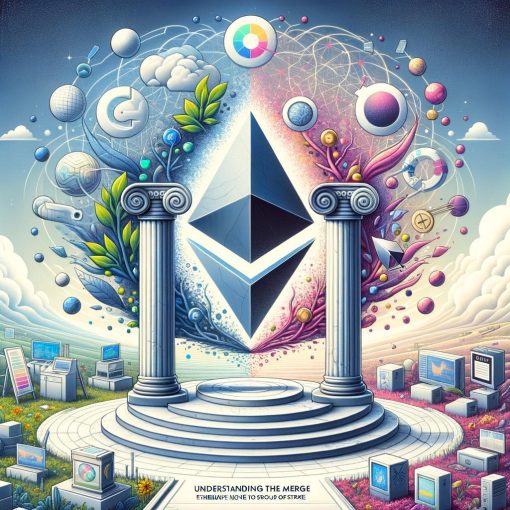
The Merge marks Ethereum’s shift from energy-intensive proof of work to proof of stake, reducing energy use, improving scalability and security, and reshaping incentives for validators and developers.