

The ethereum Virtual Machine (EVM) is the deterministic, sandboxed runtime environment that executes smart contract bytecode on the Ethereum blockchain. Acting as a global state machine, the EVM processes transactions, updates account states, and enforces the protocol rules that make decentralized applications (dApps) possible. By providing a consistent execution model across all network nodes, the EVM ensures that contract logic yields the same outcome for every participant, a property that underpins trustlessness and consensus in Ethereum’s ecosystem.
At its core the EVM interprets compiled contract code (produced by high-level languages such as Solidity or Vyper) as a sequence of low-level opcodes, consumes computational resources measured in gas, and applies changes to a shared world state composed of accounts, balances, contract storage, and more. Its design emphasizes isolation and determinism: contracts run in a confined environment with no direct access to the underlying host system, and every operation is costed to prevent abuse, infinite loops, or denial-of-service attacks. These features make the EVM a robust platform for implementing complex on-chain logic while preserving network security and liveness.
Beyond its technical role, the EVM is central to Ethereum’s developer and business ecosystem. Its stable execution semantics and widespread tooling-compilers, debuggers, testing frameworks, and formal verification tools-have fostered a rich landscape of smart contracts, tokens, and decentralized finance protocols. Moreover, the EVM’s model has been adopted and adapted by numerous other blockchains, creating an interoperable base for smart contract portability and cross-chain innovation. Understanding the EVM’s architecture,constraints,and evolution is thus essential for developers,auditors,and architects building reliable and scalable blockchain applications.
overview of the Ethereum Virtual Machine and Its Role in Decentralized Applications
at the heart of Ethereum’s request layer sits a compact,deterministic virtual CPU that executes smart contract programs compiled to low-level bytecode. this runtime provides a sandboxed environment that isolates contract execution from the host machine while ensuring every full node reaches the same result for the same inputs. Because the EVM is implemented identically across clients,it is the single source of truth for how contract logic affects the shared ledger.
execution on this runtime follows a precise transaction-driven model: externally owned accounts or other contracts issue transactions that the EVM turns into state transitions.Two mechanisms make this model practical in a decentralized context-global state management that persists contract storage between invocations, and the gas metering system that converts computation and storage use into a predictable economic cost, preventing infinite loops and incentivizing efficient code.
Beneath that simple model sits a concise architecture made for determinism and auditability. Key pieces include a stack-based execution model, ephemeral memory for computations, persistent storage mapped to contract addresses, and a discrete set of low-level opcodes that define available operations. A quick reference:
| Component | Purpose |
|---|---|
| Stack | Holds operands for opcodes (256-bit words) |
| Memory | Transient read/write scratch space during execution |
| Storage | Persistent key-value store for contract state |
| Gas Meter | Prevents unbounded resource consumption |
For decentralized applications, this runtime provides the guarantees needed for trust-minimized coordination: reproducible execution, tamper-evident state changes, and composability that lets contracts call and compose one another. Typical benefits developers and project teams rely on include:
- Composability – contracts can be reused as building blocks across projects.
- Transparency – every state change is visible on-chain and verifiable by anyone.
- Interoperability – common standards (e.g., ERC-20, ERC-721) create predictable integration points.
The EVM’s ecosystem also powers a rich set of developer tools and an evolving compatibility landscape: sidechains and Layer‑2s that are EVM-compatible can run the same smart contracts with different performance and cost profiles, while toolchains simplify testing and deployment. Popular developer tools include:
- Remix – in-browser contract prototyping and debugging
- Hardhat & Truffle – local testing,scripting and deployment frameworks
- Ganache – local chain for deterministic testing
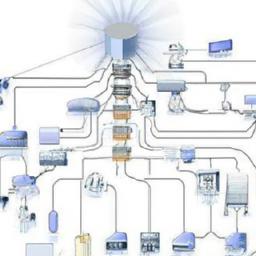
EVM Architecture and Execution Model with Gas Accounting and Opcode Semantics
The Ethereum runtime is built around a compact, deterministic virtual machine that processes smart contract bytecode in a controlled environment. At its core are the stack (a 1024-depth 256-bit word stack), ephemeral memory (byte-array cleared at the end of the call), and persistent storage (key-value state keyed by 32-byte words). The execution loop advances a program counter and manipulates those components while referring to the transaction and block-level context – gas price, sender, call value, chain ID – provided by the host. This layered architecture (stack/memory/storage + host context) makes proofs of determinism and gas accounting tractable for both light clients and full nodes.
Execution occurs as a sequence of bytecode-instruction steps where each opcode describes a state transition on the machine. each step evaluates operands from the stack, mutates memory or storage as needed, and may produce logs or external calls. Gas is consumed atomically per opcode before the state change: if insufficient gas remains, the run aborts and the state is reverted. Typical micro-steps include:
- Fetch: read the next opcode at the program counter
- Decode: determine stack pops/pushes and gas cost
- Execute: mutate stack/memory/storage or trigger a call
- Charge: deduct gas and handle exceptions or logs
This deterministic microarchitecture ensures every full node arrives at the same post-state for the same transaction input.
Gas accounting is both a pricing mechanism and a resource limiter. Each opcode has a specified gas cost that reflects computational and storage expense; complex operations like storage writes or CREATE are expensive, while arithmetic is cheap. There are also intrinsic costs per transaction (base fee, per-byte data costs) and dynamic adjustments such as refunds for clearing storage (subject to caps). The virtual machine enforces a caller-specified gas limit for the transaction; calls forward a gas stipend and may impose additional rules (e.g., the 2300 gas stipend for simple transfers in legacy behavior). Proper gas estimation is critical: out-of-gas triggers an exception and state rollback, making pre-execution cost modeling and conservative buffers a practical necessity.
the opcode set expresses semantics in well-defined categories: stack/memory ops, environment queries, control flow, storage, logging, and inter-contract calls. The following compact table highlights representative opcodes and their intended effect and cost:
| Opcode | Effect | Typical Gas |
|---|---|---|
| ADD | Pop two, push sum | 3 |
| SLOAD | Read storage slot | 2100 |
| SSTORE | Write storage (varies) | 5000-20000+ |
| CALL | External message call | 700 + dynamic |
understanding each opcode’s preconditions (stack size, valid memory range) and side effects (state change, logs, reentrancy potential) is essential for secure, gas-efficient contract design.
Operational safety in this runtime is enforced by a combination of atomicity, explicit gas charging, and deterministic rollback. If an exception occurs (including out-of-gas), the VM reverts state changes of the failing call frame, though some side effects like logs or remaining gas refunds are governed by protocol rules. Best practices include:
- Favor checks-effects-interactions to reduce reentrancy risk
- Minimize storage writes and batch updates to cut gas
- Use staticcall for read-only external invocations to avoid state changes
- Estimate gas conservatively and handle OOG gracefully in higher-level logic
These patterns, together with an intimate understanding of opcode semantics and gas metering, produce resilient contracts that play well within the constraints of the shared execution environment.

Smart Contract Lifecycle on the EVM from Compilation to Deployment and State Persistence
Source code written in high-level languages (Solidity,Vyper) is transformed into platform-ready artifacts via the compiler. The compiler emits EVM bytecode (init and runtime sections), an ABI for external interaction, and metadata such as the metadata hash and optimizer settings. Compilation choices – optimization runs, inline assembly, and generated code pathing – influence gas usage and resulting bytecode size. Tooling often adds deterministic metadata to enable reproducible builds and verification on block explorers.
Deploying a contract is a special on-chain transaction carrying init code that executes once to produce the contract’s persistent runtime bytecode. Important transaction fields include nonce, gas limit, and value; the init execution can run constructors and perform initializations. Contract addresses may be created via the CREATE opcode (sequential,sender+nonce) or CREATE2 (deterministic,salt-based),enabling predictable deployments used by factory patterns and upgradeable proxies.
State persistence in the environment relies on the Ethereum account model and a Merkle Patricia Trie: each contract account holds a balance, nonce, codeHash and a separate storage trie mapping 256-bit keys to 256-bit values. The EVM distinguishes stack, memory, and storage – the stack and memory are ephemeral per-execution while storage is persistent and costly to mutate (SLOAD, SSTORE). Developers must understand slot packing,keccak256-derived storage slots for mappings/arrays,and gas implications for cold vs warm storage access.
Because on-chain code is effectively immutable once deployed, common upgrade strategies and pitfalls require purposeful design. Typical patterns and considerations include:
- Proxy delegations (e.g., EIP-1967/EIP-1822) to separate logic and storage.
- Initialization guards to prevent re-initialization attacks.
- Storage layout management to avoid collisions when swapping implementations.
- Self-destruct and recovery – possible but discouraged for production-critical contracts.
Careful versioning, audit trails, and tests are essential to avoid irreversible storage corruption or broken interfaces.
At runtime, the EVM executes opcodes, updates the state trie, and emits logs that are part of transaction receipts (useful for off-chain indexing). Gas accounting enforces resource limits; refunds and stipend mechanics effect final cost and behavior. Quick reference:
| Phase | Key Artifact | On‑Chain Effect |
|---|---|---|
| Compilation | Bytecode + ABI | Deployable payload |
| Deployment | Init code & address | Creates persistent contract |
| Execution | logs, storage ops | State transitions |
Understanding these stages end-to-end helps architects make efficient, secure, and maintainable smart contracts that behave predictably across forks and clients.

Security Considerations and Practical Mitigation Recommendations for Common Vulnerabilities
Understanding the attack surface is the first step toward resilient smart contracts. At runtime the EVM enforces bytecode-level rules,but subtle logic errors,improper state management,and insecure dependency usage can still lead to compromise. Adopt a mindset of defense in depth: combine secure coding, vetted libraries, runtime guards and robust operational controls so that a single bug does not translate into a catastrophic loss.
Common exploit classes include reentrancy, unchecked arithmetic, improper access control, and oracle manipulation. Practical actions to reduce risk:
- reentrancy: apply Checks-Effects-Interactions and use mutexes where needed.
- Arithmetic bugs: prefer audited SafeMath or built-in Solidity overflow checks (Solidity >=0.8).
- Access control: centralize roles with minimal privileges and explicit modifiers.
- Oracles & front-running: design for delayed settlement, commit-reveal, and economic incentives.
Beyond code fixes, integrate tools and processes: static analyzers, symbolic execution, and fuzzing catch many class-level issues before deployment. Leverage established patterns and libraries – for example, OpenZeppelin contracts for role management and upgradeability proxies – and enforce automated testing and CI pipelines that include unit, integration and gas-usage tests. Regular audit cycles and staged testnet deployments materially improve confidence.
Operational safeguards complement developer controls. Maintain emergency primitives (pausable contracts, timelocks and multi-sig governance) and real-time monitoring of abnormal transactions and gas anomalies. The table below summarizes concise pairings of threats and pragmatic mitigations that teams can adopt quickly:
| Threat | Quick Mitigation |
|---|---|
| Reentrancy | Use Checks-Effects-Interactions, reentrancy-guard |
| Unchecked math | Enable Solidity overflow checks / SafeMath |
| Privileged access abuse | Least-privilege roles, multi-sig for critical ops |
| oracle manipulation | Use aggregated feeds, slippage limits, and dispute windows |
Security is an ongoing discipline: combine static and dynamic analysis, maintain dependency pinning, rotate keys and secrets, and run public bug bounty programs to harness external scrutiny. Emphasize clear governance for upgrades and emergency responses, and make secure-by-default choices – they reduce surface area and make incident response predictable and effective.

Performance Optimization and Gas Reduction Strategies for Efficient Contract Design
Gas efficiency directly affects user experience, security margins, and long-term costs on-chain. Smart contracts that bloat bytecode or perform unnecessary state writes inflate transaction fees and raise the risk of out-of-gas failures. Focusing on lean execution paths and predictable gas consumption helps maintain usability for end users and reduces attack surface in resource-constrained transactions. Prioritizing optimization early in the design lifecycle avoids costly refactors later.
Adopt targeted micro-optimizations that compound into meaningful savings. Common, high-impact techniques include:
- Storage minimization – prefer in-memory computation and compact structs to reduce SSTORE calls.
- Variable packing – group smaller-value state variables into a single 256-bit slot when possible.
- Event design – emit indexed fields only for searchable data; avoid logging large payloads.
- Loop bounds – cap or avoid unbounded loops; prefer batching and pagination for large datasets.
Each technique reduces expensive opcodes or avoids repeated state transitions.
Language- and compiler-level choices unlock further reductions. Use calldata for external read-only arrays, mark constants as constant or immutable when values are known at compile or deployment time, and extract common logic into libraries to avoid duplicate bytecode. Inline assembly can be useful for critical hot paths but trade clarity and safety for gas – profile before adopting. Also enable and tune the Solidity optimizer with a realistic set of runs to match intended contract usage patterns.
| Tool | Best for | Quick Notes |
|---|---|---|
| Hardhat Gas reporter | Per-test gas metrics | Integrates into CI; shows per-function gas |
| Tenderly | Real tx replay & profiling | Visualizes call traces and hotspots |
| Solidity Coverage | Identify untested paths | Ensures optimizer behavior under test |
Use these tools iteratively: benchmark before/after changes, and validate on forked networks to capture real EVM behavior.
Architectural patterns can yield the largest wins at scale. Favor pull over push for token distributions to avoid expensive loops, use batching to amortize overhead across operations, and implement explicit refund strategies (e.g., clearing storage) where appropriate to leverage gas refunds. Keep fallback logic minimal,and design upgradeability to avoid inflated proxies or redundant storage.document gas expectations in interfaces so integrators can plan accordingly.

Tooling Testing and Debugging best Practices to improve Development Workflow on the EVM
Choose a predictable, extensible toolchain and treat your local environment as the canonical runtime. Use lightweight EVM forks (Hardhat Network,Anvil,Ganache) for fast iteration,and pin client and compiler versions to avoid “works on my machine” drift. Containerize CI jobs or provide developer Docker profiles so everyone runs the same node, Solidity compiler, and package-lock snapshot. Embrace deterministic seeds, snapshotting, and state for fast reset and repeatable repros when debugging tricky state-dependent failures.
Design tests that reflect real-world interactions and invariants rather than only happy paths. Prioritize a layered approach: fast unit tests for core logic,medium-weight integration tests against forked states,and a small suite of long-running property/fuzz tests to catch edge cases. Keep tests fast and isolated so they can run on every commit; move heavyweight or flaky tests to nightly pipelines.
- Unit Tests: deterministic, gas-cheap, mock external calls.
- Integration Tests: fork mainnet state for realistic token and oracle behavior.
- Fuzzing & Property Tests: discover edge state transitions and overflow-like invariants.
- Gas & Coverage: assert gas budgets and use coverage reports to find untested branches.
Debug systematically: start with logs (Hardhat console.log / debug traces) to narrow the failing area, then use transaction traces and the Solidity debugger to inspect stack, memory, and storage at each opcode. Integrate third-party tracing platforms (Tenderly, Trace by Anvil) for replayable, annotated failures and alerting. For complex reverts, reproduce the exact block and state in a forked environment so you can step through transactions deterministically and profile gas consumption around hot paths.
Automate quality gates and keep the feedback loop short. Configure linters (Solhint, Prettier for Solidity), static analyzers (Slither, MythX), and type checks as pre-commit hooks and CI steps. Use a matrix in CI to run tests against multiple compiler versions and network forks. Maintain a small, shareable table of core tooling for quick on-boarding and consistent operations:
| Tool | Primary Use | Quick Tip |
|---|---|---|
| Hardhat | Local testing & forking | use snapshots to restart tests quickly |
| Anvil | Fast EVM execution & traces | Enable traces for opcode-level debugging |
| Slither | Static analysis | Run in CI with baseline suppression |
| Tenderly | Replay & monitoring | Link alerts to failing CI jobs |

Migration and Scaling Guidance for EVM Upgrades Layer 2 Integration and Cross Chain Interoperability
When preparing to move a live EVM environment to a new runtime or integrate with second-layer solutions, begin with a rigorous risk and compatibility assessment. Map contract bytecode to the target runtime, establish a compatibility matrix for opcodes and precompiles, and document expected gas model changes. Include a clear state migration plan that defines how balances, nonces and storage slots will be transformed, and keep a tested rollback plan in case of regressions. A concise checklist helps coordinate teams and stakeholders:
- Audit contracts against new EVM semantics
- Run deterministic state snapshots and replay tests
- Benchmark gas and performance delta
- Define a multi-step deployment and rollback cadence
Choosing a scaling path requires balancing throughput, finality, and security guarantees. Optimistic rollups deliver broad EVM compatibility with longer challenge windows,while ZK-rollups offer fast finality and stronger fraud-proof compactness but often need proving infrastructure. sidechains and application-specific rollups can be practical for lower-security, high-throughput use cases. For each option,plan the bridge and messaging patterns,token custody model,and fraud/validity proof integration so the user experience and risk profile remain predictable.
Interoperability must be treated as a first-class system concern-cross-chain messaging, standardized ABI conventions, and canonical event formats reduce fragile integrations. evaluate bridge architectures with respect to latency and trust assumptions:
| Bridge type | Latency | Security Model | Best Use |
|---|---|---|---|
| Trusted Relayer | Low | Centralized | Fast integrations, testing |
| Light Client | Medium | Cryptographic | High-assurance transfers |
| Fraud-Proof Bridge | High | Economic-backed | Rollups & canonical settlement |
Robust testing and observability significantly reduce migration risk. Use shadow forks to validate behavior under production-like load, and adopt canary releases for phased rollouts. Instrument cross-chain relayers, bridges and L2 sequencers with metric exporters and distributed tracing so you can detect liveness and consensus divergences early. Prioritize automated integration tests, fuzzing for ABI edge-cases, gas regression suites, and cross-chain simulation harnesses before any mainnet migration.
coordinate governance and developer experience: implement upgrade patterns that align with your governance model (timelocked proxies, multisig, or on-chain proposals), provide migration SDKs and clear migration scripts, and publish concise migration guides for integrators. Emphasize backwards-compatible EIP targets, specify rollback criteria, and offer a migration window with incentives for early adopters.Clear documentation and developer tooling convert complex runtime and cross-chain changes into predictable operational steps for teams and users alike.
Q&A
Q: What is the Ethereum Virtual Machine (EVM)?
A: The EVM is the runtime environment that executes smart contract bytecode on Ethereum. It defines a deterministic, sandboxed instruction set, state model, and gas accounting rules so nodes can validate transactions and reach consensus on state transitions.
Q: How does the EVM relate to smart contracts?
A: Smart contracts are compiled to EVM bytecode and deployed as account code. When a transaction or message call targets a contract account, the EVM executes its bytecode to modify state, emit events, or return data according to the rules encoded in the contract.
Q: What is the EVM’s execution model?
A: The EVM is a stack-based virtual machine that operates on 256-bit words.Execution runs in an isolated environment with three main memory regions: the transient stack, a linear byte-addressable memory, and persistent contract storage. Execution is deterministic given the same inputs, state, and protocol rules.
Q: What are the core components of EVM state?
A: World state contains accounts (externally owned accounts and contract accounts), each with a balance, nonce, storage (mapping of 256-bit slots), and code. the state is organized and authenticated using a Merkle-Patricia trie (or equivalent canonical state depiction).
Q: What is gas and why does the EVM use it?
A: gas is the unit of computational cost used to meter EVM execution. Every opcode and state change consumes gas. Transactions specify a gas limit and gas price (or tip/base-fee model) so that miners/validators are compensated and to prevent infinite loops or denial-of-service attacks.
Q: How are gas fees determined after EIP-1559?
A: EIP-1559 introduced a base fee per block that is burned and a priority tip that goes to the validator. Transaction senders specify a max fee and a max priority fee; the protocol determines the actual fee paid based on the block’s base fee and tip.
Q: What are the main memory regions in the EVM and their properties?
A: Stack: LIFO, up to 1024 elements, 256-bit words. Memory: a temporary, byte-addressable, zero-initialized region that grows (and costs gas) as needed during execution. Storage: persistent per-contract key-value store (256-bit keys and values) that is permanently written to chain state and is expensive to change.Q: How are smart contracts compiled to EVM code?
A: High-level languages like Solidity or Vyper compile to EVM bytecode via a compiler that performs optimization and produces the deployment (constructor) code and runtime code. The constructor runs at deployment and returns the runtime bytecode stored on-chain.
Q: What is the difference between transaction calls and message calls?
A: A transaction is a signed, externally-originated operation that creates or calls a contract and can change global state. A message call (internal call) is executed by contract code during execution to call another contract; it does not create a signed transaction and inherits the caller’s gas context.
Q: What are EOAs and contract accounts?
A: Externally Owned Accounts (EOAs) are accounts controlled by private keys; they can send transactions. Contract accounts hold code and are executed by the EVM when called. Both have balances and nonces, but only EOAs have private keys and sign transactions.
Q: What are CREATE and CREATE2?
A: CREATE is the opcode for deploying a new contract with an address derived from the deployer’s address and nonce. CREATE2 allows deterministic contract addresses based on deployer, salt, and init code hash, enabling precomputed addresses and certain upgrade patterns.
Q: What are precompiles?
A: Precompiles are special native functions exposed at well-known addresses that perform expensive or complex cryptographic or utility operations more efficiently than if written in EVM bytecode (e.g., elliptic curve operations). They are treated as built-in opcodes by clients.
Q: Are EVM executions deterministic?
A: Yes, assuming the same initial world state, block environment (timestamp, block number, base fee, etc.), and protocol rules. Non-determinism can arise only from differences in environment fields or client bugs. Determinism is required for consensus.
Q: How do opcodes and gas costs evolve over time?
A: Gas costs and opcode semantics can change via Ethereum hard forks (EIPs). Examples include SLOAD cost changes, introduction of new opcodes, and changes to refund rules. Clients must implement the active protocol version for correct validation.
Q: What is the role of the block environment in EVM execution?
A: Execution has access to environmental fields (block number, timestamp, miner/validator address, base fee, chain ID) and transaction fields (gas price, sender, value, calldata).These values influence behavior and must be provided by the node during execution.
Q: How does error handling and reversion work?
A: The EVM can halt successfully,revert,or throw an out-of-gas/invalid opcode error. revert undoes state changes and returns a data payload without consuming all remaining gas (but it still consumes gas for the revert instruction and any used gas). Errors that exhaust gas or hit invalid opcodes typically consume remaining gas.
Q: What are common security risks related to EVM execution?
A: Reentrancy (unexpected nested calls back into a contract), integer overflow/underflow (less common with Solidity builtins/checked arithmetic), gas griefing, improper access control, unprotected selfdestructs, and unsafe external calls. Many mitigations include checks-effects-interactions, reentrancy guards, using well-audited libraries, and following compiler best practices.
Q: How are events/logs produced and used?
A: Contracts emit logs (events) which are stored as part of transaction receipts and indexed by topics for more efficient off-chain querying. Logs are not accessible to on-chain code but are critically important for off-chain services and event-driven architectures.
Q: What tools and techniques exist for debugging EVM code?
A: Popular tools include transaction tracers in clients (geth, Erigon), local debuggers (Hardhat, Foundry, Truffle), symbolic and formal analysis tools, and EVM-level traces that show opcode execution, stack, memory, and storage changes. Unit testing and fuzzing are also standard practices.
Q: What are EVM forks and why do they matter?
A: Forks (e.g., Byzantium, Constantinople, Istanbul, berlin, London) introduce protocol changes such as new opcodes, gas adjustments, or fee market reforms. Clients, compilers, and tooling must be aware of the active fork rules because they alter execution semantics and costs.
Q: What is eWASM and the future of the EVM?
A: eWASM was a proposed replacement runtime based on WebAssembly to improve performance and developer ergonomics. The EVM has rather evolved (EVM improvements, new precompiles, and optimizations). Research continues into alternative runtimes and EVM-compatible extensions, but EVM bytecode remains the dominant runtime for Ethereum L1 and many L2s.
Q: How do L2s and EVM-compatibility work?
A: Many Layer-2 solutions implement EVM-compatible environments so existing contracts and tooling can be reused. “EVM-compatible” means following EVM semantics, opcodes, and state model closely enough for bytecode compiled for Ethereum to run with minimal or no changes.
Q: What are best practices for writing EVM-smart contracts?
A: Keep contracts simple and modular, minimize on-chain state, follow checks-effects-interactions pattern, use well-known libraries (OpenZeppelin), limit the use of loops over unbounded data, include reentrancy guards where needed, set appropriate visibility and access control, and run thorough audits and tests.
Q: Where can I learn more or experiment with the EVM?
A: Practical resources include the Ethereum Yellow Paper (formal specification), Solidity/Vyper documentation, client docs (geth, Erigon, Nethermind), developer frameworks (hardhat, Foundry), and interactive EVM explorers and debuggers. Reading EIPs and chain upgrade notes helps track protocol-level changes.
If you want, I can expand any answer, provide a visual diagram of the EVM execution flow, or create a concise glossary of common EVM opcodes and their gas implications. Which would you prefer?
Insights and Conclusions
As the execution layer that defines how smart contracts run on Ethereum, the EVM sits at the heart of the platform’s programmability and decentralization. Its deterministic execution model, isolated runtime, and gas-driven resource accounting enable developers to write composable, verifiable, and economically predictable applications. Understanding these core mechanics-along with their implications for performance,cost,and security-is essential for building robust decentralized systems.
Looking ahead, the EVM ecosystem continues to evolve through protocol upgrades, alternative execution environments, and scaling solutions that expand capacity while preserving compatibility. Whether you are auditing contracts, optimizing gas use, or architecting cross-chain interactions, keeping abreast of EIPs, tooling improvements, and best practices will pay dividends. Explore testnets, review recent upgrade proposals, and use established development frameworks to deepen your practical knowledge and contribute to the platform’s ongoing maturation.


