Introduction to Wrapped Tokens and Their Role in the Ethereum Ecosystem
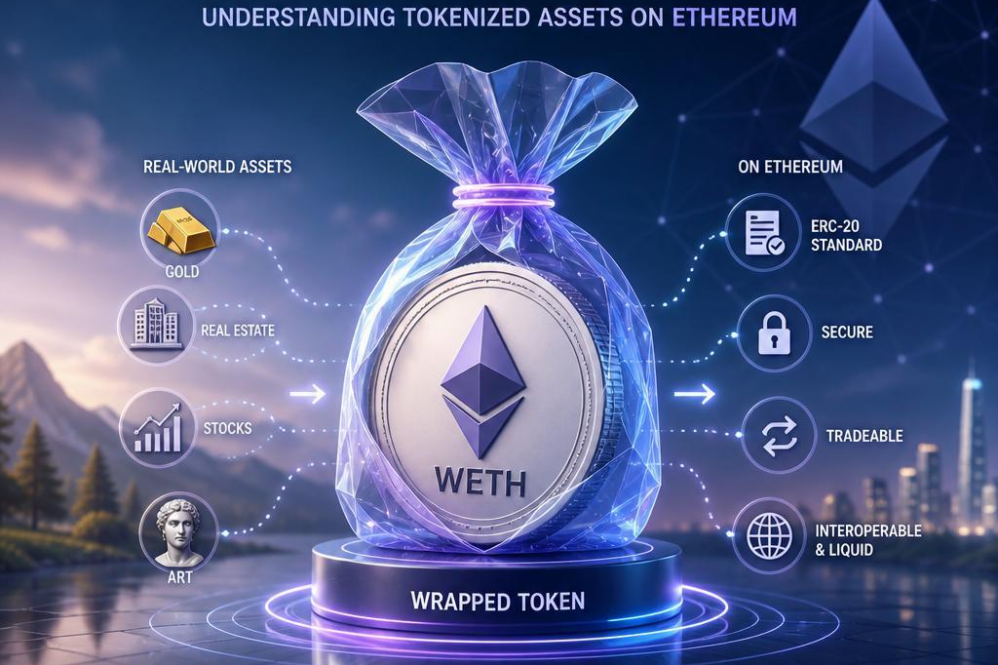
In the rapidly evolving landscape of decentralized finance (DeFi), wrapped tokens have emerged as pivotal instruments that enable seamless interoperability across blockchain networks. Essentially, a wrapped token is a cryptocurrency asset that has been tokenized on another blockchain, with its value “wrapped” or pegged 1:1 to the original asset. This mechanism ensures that holders can utilize tokens from one blockchain, like Bitcoin or Litecoin, within the Ethereum ecosystem without the need to sell or exchange the underlying asset.
The creation process involves locking the original asset in a smart contract or custodial service while minting an equivalent amount of wrapped tokens on Ethereum. This approach not only preserves the value but also unlocks the extensive functionality of Ethereum’s decentralized applications (dApps). By converting non-Ethereum native assets into ERC-20 tokens, wrapped tokens make these assets compatible with popular Ethereum protocols, such as decentralized exchanges, lending platforms, and yield farming pools.
Key advantages offered by wrapped tokens include:
- Cross-chain liquidity: They bring assets from other blockchains into Ethereum’s DeFi ecosystem, enhancing market depth.
- Programmability: Wrapped tokens can participate in smart contract interactions, enabling advanced financial products and services.
- Standardization: By conforming to ERC-20 standards, wrapped tokens maintain uniformity, simplifying integration across dApps.
- Custody and security: The underlying assets are held securely, with transparent issuance and redemption mechanisms enforced by smart contracts.
| Aspect | Description | Benefit |
|---|---|---|
| Asset Locking | Original tokens are securely locked | Ensures value backing |
| Minting | Equivalent wrapped tokens created on Ethereum | Enables Ethereum compatibility |
| Redeeming | Wrapped tokens burned to release original asset | Maintains trust and liquidity |
| Interoperability | Multiple blockchain assets interact on Ethereum | Expands DeFi capabilities |

Technical Foundations of Wrapped Tokens and How They Function on Ethereum
At its core, a wrapped token is a digital asset on the Ethereum blockchain that represents a corresponding asset held on another blockchain or platform. This tokenization process allows interoperability by pegging the value of the wrapped token 1:1 to the original asset. Technically, the wrapped token is an ERC-20 smart contract token that conforms to Ethereum’s standards, enabling seamless integration with decentralized applications (dApps), decentralized finance (DeFi) protocols, and wallets without needing native support for the original asset.
The creation and redemption of wrapped tokens hinge on a custodial or smart contract mechanism. When a user wraps an asset-say, Bitcoin-it’s locked into a secure custody contract or with a trusted custodian off-chain. Correspondingly, the smart contract mints an equivalent quantity of wrapped tokens on Ethereum. Conversely, to redeem, the wrapped tokens are burned, releasing the locked native asset back to the user. This custodial bridge ensures that the total supply of wrapped tokens always mirrors the locked asset, maintaining value parity.
Under the hood, these tokens leverage Ethereum’s robust infrastructure, employing standardized interfaces such as transfer(), approve(), and transferFrom() for seamless movement across wallets and dApps. Their compliance with the ERC-20 standard facilitates liquidity pooling and trading on decentralized exchanges. Additionally, wrapped tokens enable users to utilize non-Ethereum assets within Ethereum’s DeFi ecosystem, unlocking functionalities like lending, borrowing, and yield farming that would otherwise be inaccessible.
| Component | Functionality |
|---|---|
| Locking Mechanism | Secures the original asset off-chain or in a smart contract |
| Minting Process | Creates equivalent ERC-20 wrapped tokens on Ethereum |
| Burning Process | Destroys wrapped tokens to unlock original assets |
| ERC-20 Compliance | Ensures compatibility with Ethereum dApps and wallets |
Ultimately, wrapped tokens act as bridges, connecting disparate blockchain ecosystems by encapsulating off-chain or cross-chain assets into Ethereum’s programmable environment. This architecture not only broadens user access to various assets but also fosters innovation by layering advanced functionalities on tokens that were traditionally siloed.
Comparative Analysis of Wrapped Tokens and Native Cryptocurrencies
Wrapped tokens serve as ERC-20 representations of native cryptocurrencies from other blockchains, enabling interoperability within Ethereum’s robust DeFi ecosystem. Unlike native cryptocurrencies, which exist and operate on their original blockchains, wrapped tokens are essentially collateralized assets backed 1:1 by the underlying coin. This bridging mechanism unlocks liquidity and expanded use cases by allowing assets like Bitcoin or Ethereum Classic to seamlessly integrate into Ethereum-based platforms without needing to switch networks.
One of the primary distinctions lies in custodial trust. Wrapped tokens typically require a custodial entity or smart contract to hold the original asset securely, ensuring that every wrapped token in circulation corresponds to an actual locked asset. In contrast, native cryptocurrencies operate in a trust-minimized, permissionless environment dictated by their own blockchain protocols. This fundamental difference affects risk profiles, as wrapped tokens inherently depend on external smart contracts or custodians, whereas native coins rely on their decentralized network security.
From a functional perspective, wrapped tokens share the ERC-20 standard, affording compatibility with Ethereum wallets, DEXs, and DeFi protocols. Native cryptocurrencies often have distinct protocols and standards that limit their direct interaction with Ethereum dApps. This compatibility ensures wrapped tokens can be utilized for:
- Decentralized lending and borrowing
- Yield farming and liquidity mining
- Token swaps and synthetic assets
Below is a comparative overview summarizing critical attributes:
| Feature | Wrapped Tokens | Native Cryptocurrencies |
|---|---|---|
| Blockchain | Ethereum (ERC-20) | Original blockchain |
| Interoperability | High within Ethereum ecosystem | Limited outside native chain |
| Custody | Centralized/Smart contract-based | Decentralized |
| Use Cases | DeFi, dApps on Ethereum | Payments, native staking |
| Risk | Smart contract/custodian risks | Network consensus risks |
Use Cases and Benefits of Wrapped Tokens in Decentralized Finance
Wrapped tokens serve as vital conduits in the DeFi ecosystem by enabling the seamless transfer and interoperability of assets across multiple blockchains. By tokenizing assets like Bitcoin into an Ethereum-compatible ERC-20 format, users can leverage their holdings in decentralized applications that were otherwise inaccessible. This cross-chain flexibility unlocks a host of new financial opportunities without relinquishing the original asset’s value or liquidity.
One of the primary advantages of wrapped tokens is their ability to enhance liquidity within decentralized exchanges and lending platforms. Because wrapped tokens adhere to standardized token protocols, they integrate effortlessly with smart contracts, enabling users to participate in yield farming, staking, and collateralized borrowing. This creates a dynamic environment where assets can be utilized far beyond their native networks, driving efficiency and capital utilization.
Key benefits include:
- Interoperability between different blockchain ecosystems
- Increased liquidity on DeFi platforms
- Access to a wider range of financial products and services
- Preservation of underlying asset value while enabling new functionality
| Use Case | Benefit |
|---|---|
| Wrapped Bitcoin (WBTC) on Ethereum | Utilizes Bitcoin’s value in Ethereum-based DeFi apps |
| Cross-chain collateralization | Expand borrowing power across networks |
| Liquidity mining with wrapped assets | Earn rewards while providing liquidity |
Moreover, wrapped tokens bolster security and transparency by leveraging custodial or decentralized smart contracts that hold the original asset securely while minting the corresponding wrapped version. This custodial mechanism ensures one-to-one backing, mitigating risks associated with asset inflation and maintaining user trust. As such, wrapped tokens not only bridge technological divides but also uphold the integrity and trustworthiness foundational to decentralized finance.
Risks and Security Considerations When Using Wrapped Tokens
While wrapped tokens enable greater interoperability between different blockchain ecosystems, they introduce specific security vulnerabilities that users must consider. Because wrapped tokens rely on a custodian or smart contract to hold the underlying asset, the security of your investment is only as strong as the integrity and robustness of the custodian’s systems. A compromised custodian or flawed smart contract could lead to loss or theft of the underlying assets, rendering wrapped tokens worthless.
Another critical risk revolves around smart contract bugs and exploits. Wrapped tokens function through complex smart contracts that mint and burn tokens pegged to the original assets. Any vulnerability-such as reentrancy attacks, improper access controls, or logic flaws-can be exploited by malicious actors, resulting in counterfeit tokens or locking of assets. As a result, thorough code audits and ongoing security assessments are essential prerequisites before trusting a wrapped token service.
Users must also contend with the dangers of centralization and lack of transparency. Many wrapped tokens depend on centralized entities or consortiums to maintain the peg, creating centralized points of failure in an otherwise decentralized landscape. This dependency introduces counterparty risk similar to traditional custodial systems. Additionally, insufficient transparency around reserves or auditing procedures may expose users to fraudulent issuance or insolvency without timely detection.
| Risk Factor | Description | Mitigation |
|---|---|---|
| Custodian Risk | Loss due to compromised asset holders | Choose audited, regulated custodians |
| Smart Contract Vulnerabilities | Exploitation of code flaws | Audit code & use battle-tested contracts |
| Centralization | Single points of failure | Prefer decentralized wrapping protocols |
| Transparency Issues | Opaque reserve and audit practices | Demand regular audits and open reporting |
Lastly, users should be wary of liquidity and market risks associated with wrapped tokens. Because these tokens sometimes trade on less liquid platforms or suffer from fragmented liquidity pools, price discrepancies can arise, causing slippage or losses during conversion. Additionally, regulatory uncertainties surrounding wrapped tokens may impose sudden restrictions or limit usage, potentially affecting long-term viability. Evaluating these factors comprehensively will better prepare holders to safeguard their assets when leveraging wrapped tokens.
Best Practices for Managing and Trading Wrapped Tokens Safely
Ensuring the secure management of wrapped tokens begins with understanding the fundamentals of their underlying smart contracts. Always verify the authenticity of the wrapped token by checking the contract address on trusted blockchain explorers. Avoid interacting with unverified contracts to prevent scams or counterfeit tokens. Utilize wallets that support wrapped tokens natively and offer integration with reputable decentralized exchanges (DEXs) to minimize exposure to phishing attempts and malicious trading platforms.
When trading wrapped tokens, prioritize platforms with solid liquidity and transparent fee structures. It’s essential to confirm that the wrapping process, often pegged 1:1 with the original asset, is fully collateralized and regularly audited. Practicing due diligence includes reviewing the token’s audit reports and the reputation of the custodian responsible for locking the original asset. Maintaining updated software and employing hardware wallets for storage can significantly enhance operational security during transfer and trading.
Key security measures include:
- Using multi-factor authentication on wallet and exchange accounts
- Regularly monitoring token balances and transaction histories
- Staying alert to sudden price or volume changes indicative of market manipulation
- Setting transaction limits and withdrawal alerts to catch unauthorized activity early
| Practice | Benefit |
|---|---|
| Verify smart contract address | Avoids counterfeit tokens |
| Use audited platforms | Reduces risk of loss |
| Employ hardware wallets | Enhances private key security |
| Enable transaction alerts | Early fraud detection |
Lastly, remain informed about emerging security threats specific to wrapped tokens, such as vulnerabilities in cross-chain bridges or wrapped token minting processes. Participating in community forums and subscribing to project updates can provide timely warnings about risks and patches. Maintaining a cautious, informed approach combined with robust technical safeguards is paramount to managing and trading wrapped tokens in a decentralized ecosystem without compromise.


