
Ethereum’s burn rate,a key metric introduced with the implementation of EIP-1559 in 2021,has garnered notable attention within the cryptocurrency community and among market analysts. This mechanism was designed to modify fee structures and introduce a deflationary aspect to the network by burning a portion of transaction fees. Recent data indicates that Ethereum’s burn rate has sharply declined, reaching an all-time low and trending toward zero, highlighting a potential decrease in network demand and activity; ]. This decline raises important questions about the current state of the network’s economic model and the implications for its future. Understanding the dynamics behind Ethereum’s burn rate-its causes, recent trends, and potential impacts-is essential for investors, developers, and stakeholders seeking to navigate the evolving landscape of blockchain technology.
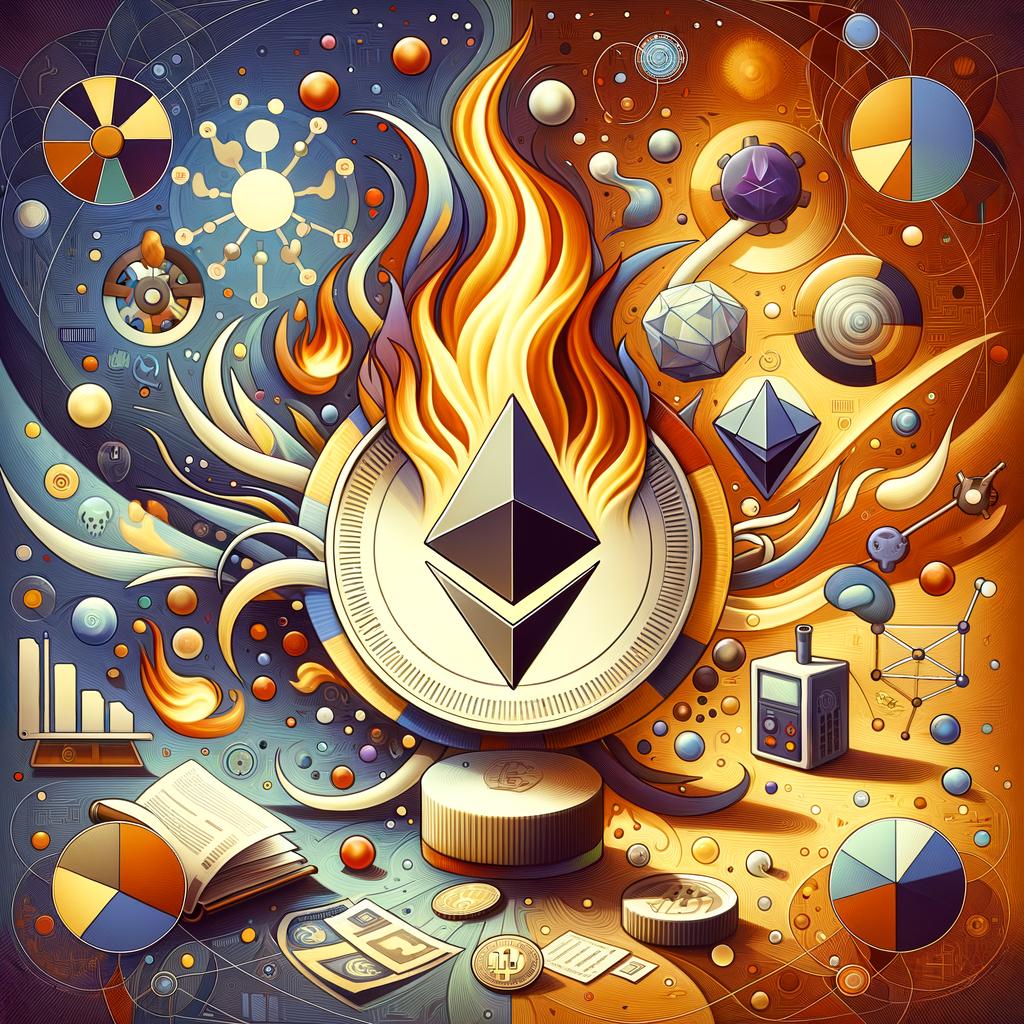
Understanding Ethereum’s Burn Rate and Its Implications
The implementation of EIP-1559 introduced a fundamental change in how transaction fees are handled on the Ethereum network. Rather of all fees going directly to miners, a base fee is now burned-permanently removed from circulation-whenever a transaction is processed. This burn mechanism creates a scarcity engine that has the potential to reduce the total ETH supply over time, especially when network activity is high.As more ETH is destroyed via fee burning than is created through block rewards, Ethereum’s supply experiences net deflation, contributing to its long-term value proposition.
Understanding the dynamics of the burn rate requires recognizing several key factors that influence it:
- Transaction Volume: Higher transaction throughput means more fees burned, accelerating supply reduction.
- Network Congestion: When blocks become fuller, base fees rise, increasing the quantity of ETH burned per transaction.
- Issuance vs. Burn Balance: The net impact depends on the relationship between ETH issued to validators and ETH burned via transaction fees.
| Metric | Effect on ETH Supply | Examples |
|---|---|---|
| High Network Activity | Increased ETH burned | Busy defi events, NFT drops |
| Low Activity | ETH issuance may outpace burn | Off-peak hours or low-demand periods |
| Issuance Reduction upgrades | Lower ETH creation | Ethereum 2.0 Proof-of-Stake shift |
Ultimately, the burn rate under EIP-1559 not only regulates fee volatility but also acts as an integral part of Ethereum’s monetary policy.By introducing predictable scarcity, it enhances ETH’s potential as a deflationary asset. This model aligns incentives across users, validators, and developers to foster a healthier and more sustainable ecosystem moving forward.
For real-time tracking of ETH supply changes and burn statistics, platforms like Ultra Sound Money provide valuable insights into this evolving economic mechanism.
Analyzing the Mechanisms of EIP-1559 and Transaction Fees
The introduction of EIP-1559 transformed Ethereum’s fee model by replacing the traditional auction-based approach with a dual-fee structure. At its core, the mechanism implements a base fee that dynamically adjusts according to network congestion, ensuring transaction fees better reflect demand in real-time. This base fee is burned-removed from circulation-contributing directly to Ethereum’s deflationary pressure. Alongside this, users can include a priority fee (or tip) to incentivize miners for faster processing, introducing more predictability and transparency in transaction pricing.
This new design not only smooths gas price volatility but also aligns economic incentives to manage block sizes more intelligently. Miners receive no part of the base fee,which is permanently burned,reducing supply over time,while priority fees reward miners directly. this separation of fees has led to a more efficient fee market and better user experience during high network usage.The mechanism also implicitly regulates block sizes, allowing temporary expansions above the target size when needed, which helps alleviate network congestion without immediate fee spikes.
| Fee Component | Purpose | Effect on Ethereum |
|---|---|---|
| Base Fee | Dynamic minimum fee, burned | Reduces ETH supply, controls congestion |
| Priority Fee | Incentivizes miners | Faster transaction inclusion |
| Block Size Adjustment | Flexes around target size | Reduces high fee volatility |
- Fee Burning: Decreases circulating ETH, impacting overall supply dynamics.
- Predictability: Stabilizes gas prices, helping users estimate costs more reliably.
- Economic Efficiency: Rewards miners fairly without inflating token supply.
The Role of Supply and Demand in Ethereum’s Ecosystem
Ethereum’s supply dynamics have been fundamentally reshaped by EIP-1559,introducing a burn mechanism that directly links network activity to the reduction of circulating ETH. Unlike traditional inflationary models where supply continually increases, Ethereum now experiences a deflationary pressure whenever transaction fees are burned. This change creates a unique interplay where demand for transaction space directly influences the total supply, making network usage a key driver of Ether scarcity.
Factors impacting supply and demand in Ethereum include:
- Transaction volume and network congestion – higher activity burns more fees, reducing supply.
- Staking dynamics post-Merge, which lock up significant amounts of ETH, restricting liquid supply.
- Market sentiment and adoption levels affecting holders’ willingness to sell or accumulate ETH.
| Metric | Before EIP-1559 | After EIP-1559 |
|---|---|---|
| Supply Growth | Inflationary | Deflationary during high demand |
| Fee model | Full miner tip | Base fee burned,tip to miners |
| Network Effect | Uncorrelated | Directly tied to fee burns |
This nuanced balance between supply contraction through burning and the growing demand driven by decentralized applications and DeFi protocols creates a feedback loop that enhances Ethereum’s economic robustness. As more users engage the network, the corresponding increase in burned fees can stabilize or even reduce circulating supply, perhaps supporting ETH’s price over time. Understanding this mechanism is paramount for grasping how Ethereum’s economic incentives align participant behavior in a continuously evolving ecosystem.
Evaluating the Impact of Burn Rate on Ethereum’s Economic Model
The burn rate,introduced with Ethereum’s EIP-1559 upgrade,fundamentally reshaped the network’s economic incentives by permanently removing a portion of transaction fees from circulation. This mechanism helps counteract inflationary pressures by reducing ETH supply over time, especially during periods of high network demand. However, recent data reveals a significant downturn in the daily burn rate, which correlates directly with diminished on-chain activity, lower transaction counts, and fewer new address creations. Such trends suggest that Ethereum’s deflationary pressure is cooling, reflecting a slackening in user engagement and demand for blockspace.
Key contributors to the current burn rate dynamics include:
- declining active addresses, hitting the lowest averages since late 2024.
- Reduced transaction volumes amid broader market softness.
- A waning number of new smart contract deployments and NFT minting events.
This environment temporarily weakens the economic model’s built-in scarcity mechanism, as fewer ETH tokens are burned daily, possibly leading to a short-term suspension of deflationary momentum. Thus, Ethereum’s economic equilibrium is increasingly sensitive to user activity fluctuations.
| Metric | Current Trend | Impact on ETH Supply |
|---|---|---|
| Daily ETH Burn | All-time low (~53 ETH) | Reduced deflationary pressure |
| Active addresses | Lowest since Oct. 2024 | Lower transactional demand |
| New Address Creations | Declining | Slower network growth |
while the burn rate mechanism remains a cornerstone of Ethereum’s novel economic paradigm, its effectiveness is inherently tied to network demand. Fluctuations in burn rate thus act as a real-time indicator of network health, user activity, and ultimately, ETH’s supply trajectory. Moving forward, ongoing monitoring of these metrics will be critical to assessing how Ethereum balances growth with sustainable scarcity.
Strategic Insights for Investors in a Changing Ethereum Landscape
Adapting investment strategies in the wake of Ethereum’s dynamic fee-burning mechanism requires a nuanced understanding of network activity and its macroeconomic impact.EIP-1559 fundamentally alters how transaction fees are processed by introducing a base fee burn, which can reduce ether supply over time. Investors must factor in the deflationary pressure this creates, especially during periods of high on-chain demand when the burn rate accelerates significantly.
Key considerations for positioning in this evolving landscape include:
- Monitoring network congestion: High demand spikes the base fee, increasing the burned ETH and potentially boosting scarcity.
- Assessing token velocity: Changes in transaction volume affect burn dynamics and future price stability.
- Evaluating staking rewards: post-Merge, the balance between issuance and burn rate influences net supply issuance.
| Metric | Impact on Ether Supply | Investment Consideration |
|---|---|---|
| Base Fee Burn Rate | Deflationary pressure during high network use | Chance for long-term thankfulness |
| Transaction Volume | Directly correlates with ETH burned | Indicator for timing buys/sells |
| Staking Rewards | Counterbalances burn, affects supply growth | Strategy integration for earning passive income |
Ultimately, the interplay between Ethereum’s burn mechanism and its staking economics creates unique pathways for investors to leverage scarcity while generating yield. Staying informed on on-chain metrics and network upgrades empowers investors to strategically navigate volatility and capitalize on Ethereum’s evolving monetary drivers.
Recommendations for Leveraging Burn Rate trends in Market Analysis
monitoring Ethereum’s burn rate provides invaluable insights into network activity and economic dynamics. Traders and analysts should prioritize real-time burn data to gauge transaction demand and fee market fluctuations. Integrating burn rate trends with on-chain metrics such as gas usage and transaction volume can enhance predictive models for price movements and network congestion.
Incorporating burn rate analysis into market strategies involves recognizing patterns of deflationary pressure.A sustained increase in burn rate frequently enough signals higher network utilization, potentially indicating bullish sentiment or upcoming price appreciation. Conversely, a decline may reflect diminished activity or market cooling, prompting cautious positioning or risk mitigation.
For practical application, the following checklist supports actionable insights:
- Track EIP-1559 base fee changes alongside burn volumes for correlation with price volatility.
- Analyze post-upgrade burn rate shifts to understand improvements in fee efficiency and their market impact.
- Compare burn rate against issuance to assess net token supply dynamics influencing scarcity and long-term value.
| Metric | Indicator | Market Insight |
|---|---|---|
| Burn Rate ↑ | Growing network demand | Potential bullish momentum |
| Burn Rate ↓ | Lower activity | Market cooling or consolidation |
| Burn vs Issuance | Deflationary balance | Token scarcity, upward price pressure |
Q&A
Q: What is Ethereum’s burn rate, and why is it significant?
A: Ethereum’s burn rate refers to the rate at which a portion of transaction fees (base fees) are permanently removed from the circulating supply. this mechanism is central to Ethereum’s economic model, especially following the implementation of EIP-1559, as it influences overall token supply, scarcity, and potentially the network’s value. A higher burn rate can lead to a deflationary effect, reducing supply over time.
Q: What is EIP-1559, and how did it impact Ethereum’s fee structure and burn rate?
A: EIP-1559, introduced in August 2021, overhaul of Ethereum’s fee mechanism, replaced the traditional first-price auction system with a base fee that adjusts dynamically based on network congestion.Part of this new system involves burning the base fee, thereby reducing the total supply of ETH. This innovation aimed to improve fee predictability for users and introduce a deflationary characteristic to Ether, directly impacting the burn rate.
Q: How dose the burn rate fluctuate, and what factors influence it?
A: The burn rate varies according to network activity-higher transaction volume and congestion increase the base fee, thereby raising the amount of ETH burned per block. Conversely, during periods of low activity, the burn rate decreases. External factors such as DeFi activity, NFT sales, and overall market demand can significantly influence this dynamic.
Q: What are the implications of EIP-1559’s burn mechanism for Ethereum’s long-term value?
A: By creating a deflationary pressure through the ongoing burning of base fees, EIP-1559 can potentially increase Ether’s scarcity, which may positively influence its value over time. This mechanism aligns the network’s economic incentives, encourages token holding, and aims to stabilize or appreciate ETH’s price as demand increases.
Q: Are there any recent insights or data on Ethereum’s burn rate?
A: Recent data from platforms analyzing Ethereum’s network activity indicate that the burn rate can vary significantly based on network congestion. For instance, during periods of high activity, such as during major DeFi or NFT booms, the burn rate has been observed to be substantial, contributing to a net supply reduction. Specific figures and trends can be tracked via blockchain explorers and analytics tools to monitor these fluctuations in real-time [[1]].
Q: How does ethereum’s burn rate compare to Bitcoin’s issuance model?
A: Unlike bitcoin, which employs a fixed issuance schedule with a capped supply, Ethereum’s burn mechanism introduces a variable supply dynamic influenced by network activity. While Bitcoin’s supply is predictable and inflation-controlled, Ethereum’s burn rate can lead to periods where issuance is effectively offset or even surpassed by burning, resulting in a deflationary trend-something not present in Bitcoin’s model [[2]].
Q: What should users and investors consider regarding Ethereum’s burning mechanism?
A: Users and investors should monitor the network’s activity to understand potential changes in supply dynamics.A high burn rate can signal strong network usage and demand, possibly leading to appreciation in ETH’s value. Conversely, during periods of low activity, the burn rate diminishes. Understanding these patterns helps in making informed decisions about holding or transacting with ETH [[3]].
Note: The data and insights provided here are based on current understanding and available analytics. For detailed, real-time updates, consult blockchain analytics platforms and official Ethereum documentation.
Insights and Conclusions
understanding Ethereum’s burn rate, particularly in the context of EIP-1559, is crucial for grasping the evolving dynamics of this decentralized platform. The implementation of a fee structure that includes a base fee, which is burned, has significant implications for both the supply of Ether and the overall functionality of the Ethereum network. As the ecosystem continues to adapt and grow, the impact of the burn rate on transaction costs, network security, and investment valuation will remain pivotal for stakeholders. By staying informed about these changes and their underlying mechanics, investors, developers, and users alike can better navigate the opportunities and challenges that Ethereum presents in the ever-shifting landscape of cryptocurrency. Continued research and engagement with community developments will be essential as Ethereum strives to cement its position as a leader in the blockchain space.


