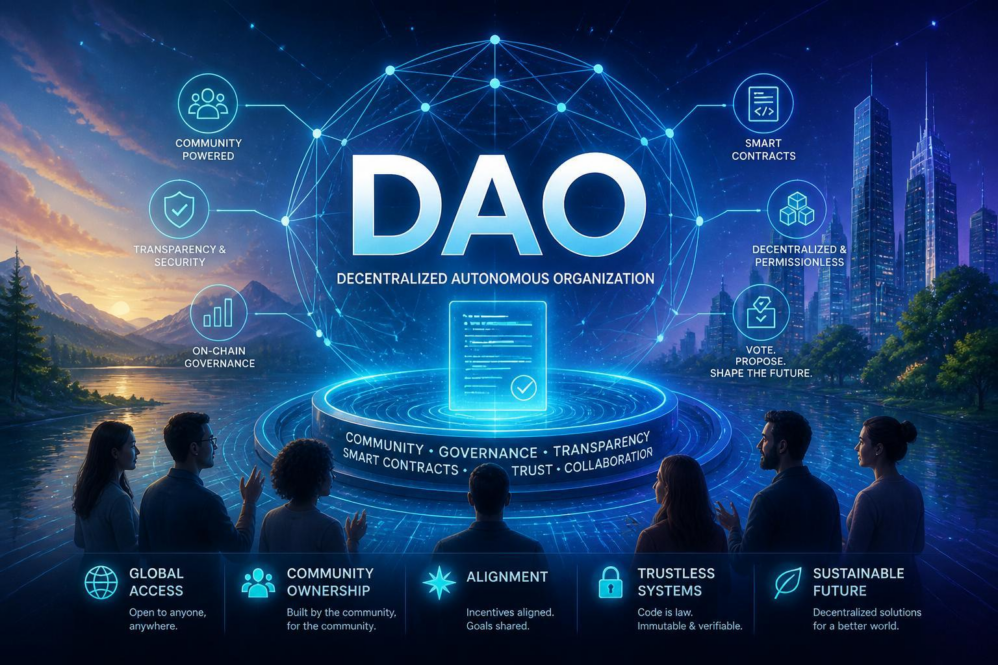
A decentralized autonomous organizationor DAO, fundamentally transforms the traditional structure of management within a company or organization. Unlike conventional hierarchies,where decisions are made by a central authority,a DAO operates on a network of smart contracts,allowing for a more democratic and transparent governance model. This shift heralds a new era in community management, where every member can have a say in the direction and goals of the organization.
At its core, a DAO is built on blockchain technology, eliminating the need for intermediaries and fostering a direct connection between contributors and decision-making processes. Members of a DAO typically acquire tokens, which act as voting rights, enabling them to propose and vote on issues that affect the organization. For instance, a DAO might create a governance mechanism where users can propose new features, allocate funds to specific projectsor even make key decisions about the organization’s future direction.
The beauty of daos lies in thier ability to tap into the collective wisdom of a community, often leading to more informed and inclusive decisions. To put this into perspective, consider a small organization that wants to introduce a new project. Traditionally, a few selected individuals might decide based on their views. In a DAO, the decision-making power is distributed among token holders, who vote on the project’s merits and allocation of resources. This process not only democratizes decision-making but also ensures that the broader community has a vested interest in the organization’s success.
To illustrate how DAOs can operate, let’s take a look at a simple table outlining the key components of a DAO structure:
Component
Description
Smart Contracts
Automated rules that govern the organization’s decisions.
Token System
Token allocation that grants members governance rights.
Proposal Voting
Members propose and vote on changes.
This table outlines the basic framework of a DAO, highlighting how it can be both innovative and accessible to users familiar with blockchain technology. As DAOs continue to evolve, they present a promising path toward redefining community governance and collaboration on a global scale.
The Role of Smart Contracts in DAO Operations
Smart contracts play a pivotal role in the architecture of decentralized autonomous organizations (DAOs), acting as the backbone of many of their operational facets.By embedding rules and regulations into code, these contracts ensure the integrity and openness of the organization’s processes without the need for intermediaries. This automation not only enhances efficiency but also reduces the risk of human error and misconduct, which are inherent in traditional organizational structures. When a DAO is established, stakeholders define how the organization functions through these self-executing contracts, which then automatically trigger actions based on predetermined conditions. For instance, a smart contract might manage the distribution of funds or the allocation of resources among members according to the terms set by the community.
A critical aspect of smart contracts within DAOs is their ability to enforce the rules set by the organization’s governance structure. Members vote on how the DAO operates, such as on funding proposals, membership criteriaor project allocations.Smart contracts then act as the enforcer, ensuring that the results of these votes are implemented precisely and without discretion. This not only eliminates the potential for corruption but also provides a clear and transparent method for dispute resolution, as every transaction and decision is recorded on the blockchain. The decentralized nature of smart contracts means that onc a contract is in place,it cannot be altered,thus ensuring the immutability of governance decisions.
Another key feature of smart contracts in DAOs is their capacity to handle a wide range of financial transactions. They can automate tasks such as token distribution, dividend paymentsand staking rewards, all while maintaining the security and privacy of the members involved. This automation allows for more efficient and secure financial management, which is crucial for the stability and growth of a DAO. Such as,a smart contract might be designed to release funds only when a certain milestone is reached,ensuring that all stakeholders act in the best interest of the organization. the use of tokens as a governance mechanism within DAOs is directly linked to the functionality of smart contracts,as they dictate the voting power of each token holder.
To illustrate the complexity and versatility of smart contracts within DAO operations, let’s take a look at a simplified example.Imagine a DAO that aims to fund open-source software projects. The smart contract managing this DAO would include rules for proposal submission,voting periods,and payout conditions. If a member proposes a project, the smart contract would initiate a voting process among token holders.Once the voting period is over, the results are automatically tallied and, if the proposal passes, the smart contract would release the necessary funds to the project’s developer. This process not only ensures transparency but also accelerates the decision-making process. Below is a simplified table illustrating such a scenario:
Phase
Task
Role
Proposal Submission
Token holders suggest projects for funding
Developer
Voting Period
Stakeholders vote on proposals
Community
Results Announced
Winner announced
Smart Contract
Funding Release
funds are automatically transferred
Smart contract
smart contracts are integral to the functioning of DAOs, ensuring transparency, securityand efficiency. They eliminate the need for a centralized authority, making them an essential component of the decentralized ecosystem that is the future of community governance.
Decentralized Governance: Advantages and Challenges
Decentralized Autonomous Organizations (daos) aim to transform the way we approach governance by using smart contracts to automate decision-making processes. This shift not only democratizes control over resources and operations but also reduces the potential for centralized control and corruption. By distributing power and responsibilities across a network of participants,DAOs can lead to a more equitable distribution of benefits and risks.
One of the most compelling advantages of daos is their transparency. Transactions and decisions made through smart contracts are recorded on a blockchain, making every action traceable and verifiable. This transparency fosters trust among participants and reduces the likelihood of fraudulent activities. Moreover, as the rules are encoded in the form of a smart contract, they are enforced impartially without the need for intermediaries. Though, this transparency also comes with challenges. As a notable example, once the rules are set in stone through code, modifying them can be immensely complex or even impossible. This rigidity can stifle innovation and flexibility in rapidly changing environments. the lack of direct human oversight can create issues when unforeseen errors occur.
DAOs also address the issue of access barriers inherent in traditional governance structures. Membership in a DAO is typically open to anyone willing to contribute resources, skillsor effort. Such inclusion broadens the pool of contributors and ideas, enhancing creativity and resilience. Yet, ensuring the participation of diverse voices while preventing the exploitation of vulnerabilities within the community poses another set of challenges. Balancing these needs requires robust mechanisms for dialog, conflict resolutionand security enhancement.To illustrate the potential benefits and obstacles of DAO governance, consider the following table. It summarizes the key attributes and the corresponding challenges associated with DAOs:
Attribute
Advantage
Challenge
Transparency
Reduces corruption and increases trust
Finds it hard to modify rules once established
Inclusivity
Expands participant base and diversity of ideas
Ensuring equal portrayal and security against malicious actors
Decentralization
Reduces reliance on central authorities
Maintaining effective coordination and accountability
Automation
Ensures fair and consistent enforcement of rules
Requires careful rule design to prevent inflexibility
Tokenomics and Voting Power dynamics
Tokenomics in a DAO defines the economic incentives and rules that govern the community, making it a cornerstone of its governance and decision-making processes. Tokens are not just a means of access but a representation of voting power, which can significantly influence how proposals get approved or rejected. Typically, holders of tokens have the privilege to suggest proposals and cast their votes,with the weight of each vote directly tied to the number of tokens held by the individual.
To illustrate how tokenomics plays into voting power, consider a scenario where a minor contribution like proposing an amendment might require a token threshold, whereas major decisions such as the expenditure of funds could need a much higher bar. This tiered system aims to balance participation while ensuring that important changes are backed by a significant part of the community.Table 1 below provides a fast glance at typical voting thresholds for different types of governance actions.
Proposal Type
Token Requirement
Minimum Votes for Passing
Amendment Suggestion
1000 tokens
3%
Major Treasury Action
10,000 tokens
20%
the interplay between token price and voting power brings an interesting dynamic to the table. During a bull market, token prices could rise, increasing the effective voting power of holders due to the diluted distribution of tokens among a broader user base when tokens are more expensive. Conversely, in a bear market, token prices dropping might lead to centralized voting powers in the hands of a few large stakeholders. Such fluctuations highlight the importance of designing tokenomics with an eye towards long-term sustainability and equitable governance.
In essence,the rules surrounding tokenomics dictate how community members interact and engage with the DAO,from proposing new initiatives to approving critical changes. Maintaining a balance between incentivizing participation and preventing undue influence is key to the success of any DAO’s governance structure. Effective tokenomics ensures that the blockchain-based collective benefits over time while mitigating the risks associated with centralization and market volatility.
Building Resilient DAO Communities Through Transparent Leadership
Transparency in governance is the backbone of any prosperous decentralized autonomous organization (DAO). It ensures that community members remain informed and engaged, fostering trust and accountability. To uphold this principle, DAO leaders must consistently communicate important decisions, progress updatesand strategic goals. This openness not only builds the community’s confidence but also prevents conflicts and misinformation from spreading.
Effective leadership within a DAO hinges on clear communication channels. Regular updates on the organization’s financial status, member activities, and upcoming initiatives are crucial. Transparent communication also extends to the operational aspects,such as proposal reviews and governance discussions.It’s essential to maintain these channels active and accessible to all members, regardless of their involvement level. Trust is built on a foundation of honesty and openness,which are vital for sustaining a thriving community.
A key aspect of transparent leadership in a DAO is the implementation of robust governance structures. This includes creating a fair and inclusive voting process where every member has a voice. A governance system that values input from the entire community fosters a sense of ownership and duty among members. To achieve this, DAO leaders should focus on developing a transparent proposal-making and decision-making framework.This framework should be documented thoroughly, ensuring that all members understand the process.
To further enhance transparency, DAO communities can adopt specific tools and practices. For instance, integrating blockchain analytics to track and verify governance activity can go a long way in maintaining trust. using open-source software and smart contracts for governance ensures that the rules and operations of the DAO are clear and immutable.A sample table illustrating how one might structure these tools could look like this:
Tool/Practise
Function
Blockchain Analytics
Monitor and verify governance votes and activity
Open-Source Software
Ensure transparency and community input in development
Smart Contracts
Document and enforce governance rules and processes
A soft fork is a backward-compatible protocol upgrade that tightens rules so updated nodes can enforce changes while legacy nodes remain valid. It enables gradual adoption with minimal disruption to the network.
The DAO hack of 2016 exploited a vulnerability in a smart contract, allowing attackers to siphon $60 million in ETH. This landmark event exposed critical flaws in decentralized governance and reshaped Ethereum’s security protocols.
Flash loans are a revolutionary feature in decentralized finance (DeFi) allowing users to borrow funds without collateral, provided the loan is repaid within a single transaction. This mechanism enables arbitrage opportunities and innovative financial strategies, reshaping traditional lending paradigms.