
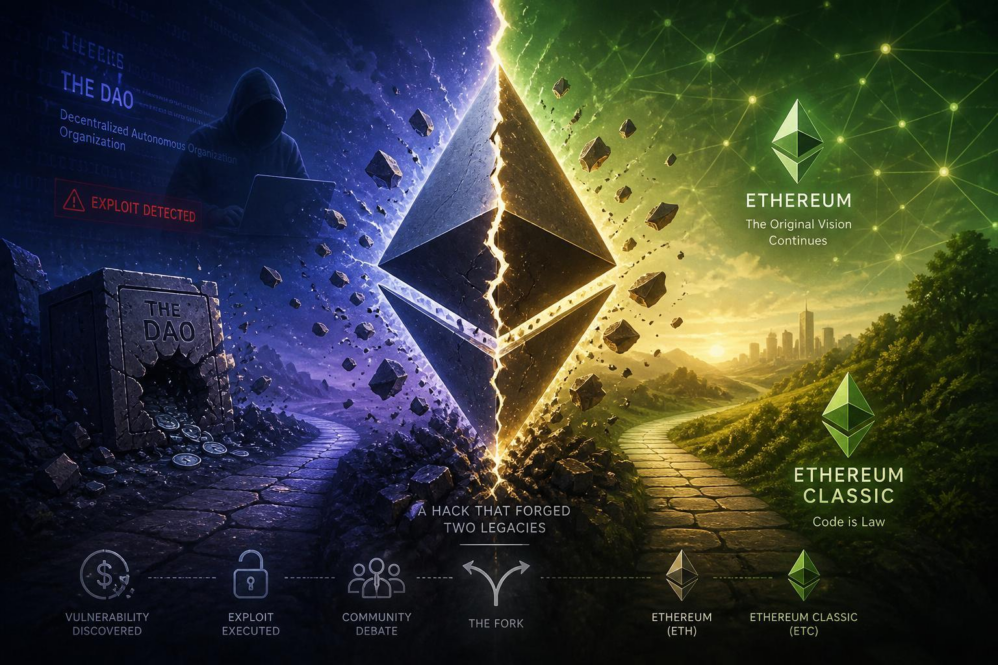
The Fork That Divided Ethereum: Genesis and Implications
The DAO hack of 2016 was a pivotal moment that reshaped the Ethereum ecosystem. The hack, which saw over $50 million worth of tokens siphoned from The DAO, sparked a fierce debate within the community. Developers, minersand users had to decide whether to ignore the hack and adhere to the principle that the blockchain’s code is lawor take extraordinary measures to alter the blockchain and recover the lost funds. this event raised a fundamental question: should the immutable nature of the blockchain be altered to correct obvious flaws and injusticesor is it better to stick to the rules, no matter the cost?
the majority of the Ethereum community chose to implement a hard fork, creating a new version of the blockchain that returned the funds to The DAO’s shareholders.This hard fork, known as Ethereum Classic, highlighted the deep divisions within the community. Some chose to continue on the original blockchain, maintaining the principle of immutability, while others embraced the new version, now simply called Ethereum. This controversial split birthed two distinct communities, each with its own philosophy and governance model.
The implications of this fork extend far beyond Ethereum itself. It forced the crypto world to confront issues of community consensus, governanceand the balance between decentralization and the need for intervention in the face of exploitation. As then, discussions about blockchain governance have grown more complex and nuanced, with manny projects implementing mechanisms for soft forks, protocol upgrades, and other forms of on-chain governance.
this fork not only solidified Ethereum’s status as the leading smart contract platform but also highlighted the importance of community governance and the ethical dilemmas faced by decentralized networks. The aftermath of The DAO hack is a pivotal chapter in the history of blockchain technology, one that continues to shape the future of digital currencies and decentralized applications.
| Project | Community Response | Outcome |
|---|---|---|
| Ethereum | Hard fork to recover funds | Continues to evolve, attracting major enterprise support |
| Ethereum Classic | No intervention, adherence to blockchain immutability | Maintains a smaller but dedicated following |
Lessons Learned and Security Recommendations for Web3 Projects
When the DAO hack brought down one of the most ambitious decentralized autonomous organizations in 2016, it didn’t just affect the cryptocurrency community; it had lasting impacts on the entire blockchain ecosystem. From this massive breach, developers and enthusiasts learned invaluable lessons that have as influenced the way Web3 projects approach security. First and foremost, trust in smart contract audits became a cornerstone of any credible Web3 project, a stark reminder of what can go wrong without thorough vetting.
the hack highlighted the critical importance of community involvement and transparency in the growth process. Web3 projects must now not only seek transparency from the developers but also engage with their user base early and often, ensuring a collective understanding and consensus on the project’s governance structure. This shift in dynamic paved the way for a more inclusive and resilient future for decentralized technologies.
While transparency and thorough audits are non-negotiable, the use of multi-signature wallets and other advanced security measures should be standard practice. Projects that adopt a layered security strategy are better equipped to mitigate risks that could or else lead to catastrophic outcomes. These layered protections include regular security audits, the utilization of decentralized exchangesand robust internal security policies.
Understanding the DAO hack’s ripple effects also means acknowledging the split that led to Ethereum and Ethereum classic.This event underscores the need for a clear, community-driven path for addressing security issues and governance changes in Web3 projects.Moving forward, the lessons learned should inform both the technical safeguards and community management strategies of all Web3 projects, ensuring a more secure and enduring future for the blockchain ecosystem.
Ethereum Classic: A Parallel History and Its Unique Identity
Ethereum Classic diverged from Ethereum after the infamous DAO hack in 2016. This pivotal moment marked a significant fork in the blockchain’s history, leaving Ethereum Classic to continue as a separate entity. Both chains took different paths, with Classic adhering strictly to the original blockchain principles and Ethereum evolving with novel changes. This split created a unique scenario where two chains,built on the same foundation,offered distinctly different experiences to their users.
One of the core principles that set Ethereum Classic apart is its unwavering commitment to the blockchain’s immutability. This means that no matter the circumstances, transactions and smart contracts are permanent and cannot be altered. In contrast, Ethereum implemented a hard fork, changing the blockchain’s history to refund funds stolen from the DAO project. For Ethereum Classic supporters,this fork was seen as a betrayal of the blockchain ethos,leading to a philosophical and technical split that continues to this day.
The technical divergence between Ethereum and Ethereum Classic is evident in the software that underpins each network. Ethereum Classic operates with a simpler setup, relying solely on the original Ethereum Virtual Machine (EVM) without any additional features or upgrades.On the other hand, Ethereum introduced a series of upgrades, which included the shift from proof-of-work mining to proof-of-stake validation with Ethereum 2.0.This technological leap has positioned Ethereum at the forefront of blockchain development, while Ethereum Classic remains true to the initial design principles.
Despite the philosophical and technical differences, both networks have grown their ecosystems and attracted unique communities. Ethereum Classic has seen its token value fluctuate, driven by its reputation as a blockchain that values decentralization and security above all else. Simultaneously occurring, Ethereum continues to innovate, developing a bustling ecosystem of decentralized finance (DeFi) applications, non-fungible tokens (NFTs)and more. This table highlights some key differences:
| Feature | Ethereum Classic | Ethereum |
|---|---|---|
| Hard Fork | No | Implemented |
| Proof-of-Work Era | Prior | Ongoing Transition to Proof-of-Stake |
| Token Economy | Focus on Security and Decentralization | Thriving Ecosystem with Diverse Applications |
| Community Focus | Vigorous support for Blockchain Principles | Aggressive Innovation and Growth |


