
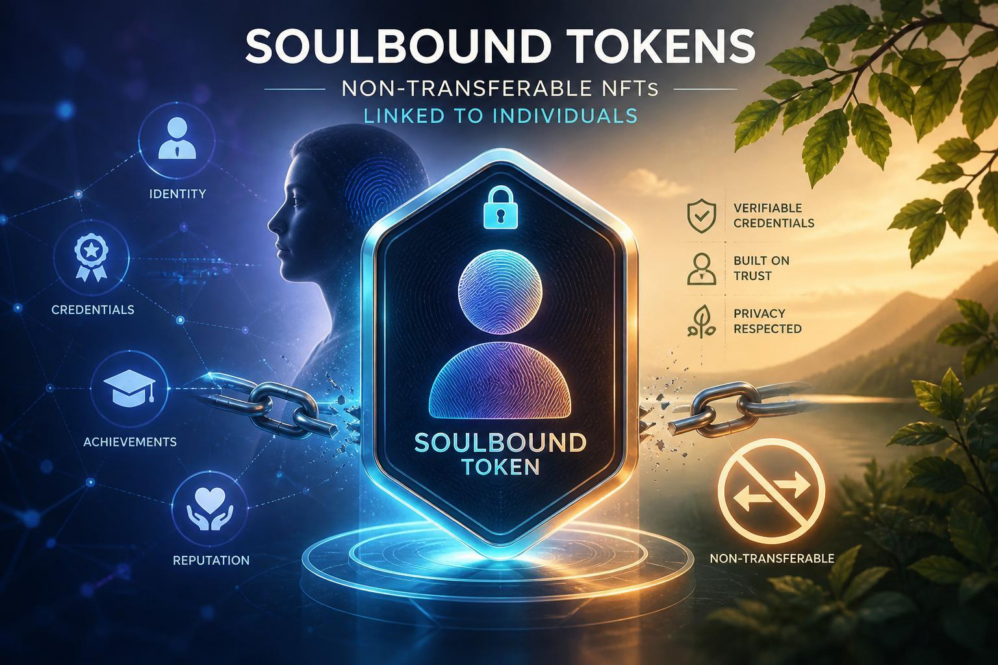
Understanding the concept of Soulbound Tokens
Soulbound tokens are a unique subset of NFTs designed specifically to represent and link to individuals in a blockchain ecosystem. Unlike traditional NFTs, which are transferable and can change hands between different addresses, Soulbound tokens are inherently non-transferable. This means thay are tied permanently to a single wallet address and cannot be exchanged or sold to others. The concept behind these tokens is to create a digital identity layer that is indelible and personal, much like a driver’s license or a birth certificate in the physical world. This allows for the creation of identity-specific credentials, such as degrees, membershipsor licenses, that are recognized and verifiable across the web.
The primary advantage of Soulbound tokens lies in their use for verifying ownership and identity. Imagine attending an online conference where you must prove you are a member to access exclusive content. A Soulbound token can serve as a digital credential, confirming your membership instantly and securely. It’s about more than just possession; it’s about proving a legitimate connection. this is where the utility of the token shines, by integrating with platforms to offer personalized services based on your verified attributes.
The mechanics behind Soulbound tokens revolve around smart contract technology that enforces the non-transferability rule. This feature introduces a level of immutability and trust that traditional NFTs do not offer. When you own a Soulbound token, it acts almost like a digital tattoo-irremovable without serious legal complications or administrative actions. This robust nature ensures that the holder can be trusted as the source and recipient of certain rights and privileges online. For instance,when claiming a reward for completing a milestone project,your token vouches for the authenticity of your accomplishment.In exploring the potential of Soulbound tokens, it’s worthwhile to consider how they might be applied in different settings. For exmaple, a table illustrating uses and benefits could illuminate their versatility.
| Use Case | Benefit |
|---|---|
| Membership Verification | Guarantees exclusive access to premium services and content. |
| Professional Credentialing | Ensures the validity and clarity of certifications and licenses. |
| Digital Identity | Provides a secure and unchangeable foundation for identity management. |
Such applications transform how digital credentials are managed and verified, offering a more secure and personalized experience for users across the internet.
The Unique Characteristics of Non-Transferable NFTs
Non-transferable Non-Fungible Tokens (NFTs), also known as Soulbound Tokens, stand out in the crowded world of digital assets due to their unique characteristics.Unlike the usual NFTs that can be traded and swapped between users, Soulbound Tokens are forever linked to a specific individual. This binding transforms these tokens into something much more personal and intrinsic to the user’s identity within a digital ecosystem.These tokens form a digital depiction of the user’s actions, achievementsand experiences in the virtual world, cementing a connection between the token and the individual.one key feature of Soulbound Tokens is their immutability. Once a token is tied to a particular user,it cannot be easily transferred or sold to another party. This characteristic sets these tokens apart from fungible cryptocurrencies, which can be freely exchanged among users. the non-transferable nature of Soulbound Tokens can lead to the establishment of more meaningful digital identities. These identities become a testament to a person’s journey and accomplishments within a virtual space, rather than a tradable asset in a speculative market.
In essence, Soulbound Tokens act as a permanent digital footprint, making them an ideal medium for rewarding loyalty and participation in a specific community.These tokens frequently enough represent a user’s membership in certain groups, such as clans or exclusive clubs, highlighting the user’s commitment and dedication over time. Such tokens can also prove one’s participation in meaningful virtual events, making them valuable as a form of digital commemoration and recognition. Below is a simple breakdown of how Soulbound Tokens can be used to mark these milestones:
| Event Type | Soulbound Token Use |
|---|---|
| Virtual Conferences | Voting rights; membership tokens |
| Festivals | Access badges; proof of attendance |
| Competitions | Reward medals; completion tokens |
because Soulbound Tokens are closely tied to user identities, they can also serve as credentials or digital passports within a virtual surroundings. These tokens can verify that a user possesses certain qualifications or attributes, such as education, skill setsor certifications that are unique to the user. This opens up several possibilities for a more regulated and secure online environment, where users are obvious and accountable for their actions and identities.
Linking Soulbound Tokens to Individual Identity
At the heart of Soulbound Tokens (SBTs) lies their unique ability to link digital assets to individual identities, rather than to wallets or accounts. This distinct feature is a cornerstone of SBTs, marking a significant departure from traditional non-fungible tokens (NFTs) by ensuring these tokens cannot be transferred between users. By nature,SBTs are designed to reflect a player’s journey and milestones within the Soulbound game universe,tying each token to a specific player’s identity. this connection means that when a player earns an SBT, it becomes an intrinsic part of their digital self, much like earning achievements in a game represent real milestones.
To understand how this works in practice, imagine a scenario where a player in Soulbound earns an SBT for completing a challenging dungeon. This token does not belong to the wallet that holds it; it belongs exclusively to the player who earned it.The platform enforces this by rejecting any attempts to trade or transfer SBTs between different individuals, thus preserving the integrity of the player’s achievements.This approach not only safeguards the value of earned tokens but also fosters a sense of personal accomplishment and uniqueness for each player.
Moreover, this linkage to individual identity extends beyond simple gameplay rewards, incorporating elements of reputation and social standing within gaming communities. As players accumulate SBTs and build their digital identities, these tokens come to represent a player’s character, contributions, and history within the Soulbound community. This builds a rich ecosystem where each player’s journey is recorded and celebrated. For instance, a player might earn an SBT for hosting a successful event or for demonstrating exceptional leadership in group activities, enhancing their profile and status within the game.
To illustrate the differences and highlights, consider two players, Alice and Bob. Alice has accumulated a collection of SBTs over various achievements, while Bob has fewer but more significant SBTs, perhaps from high-level challenges and community service.Both players see their tokens as an integral part of their gaming persona, but the nature of these tokens, combined with their unique histories, shapes their individual identities differently. A comparison table might help visualize this nuanced approach:
| Player | Number of SBTs | Type of Achievements | Representation |
|---|---|---|---|
| Alice | 10 | Multiple smaller wins,community projects | Dynamic,versatile identity |
| Bob | 5 | High-level dungeons,leadership roles | Cohesive,high-impact identity |
Such a system not only reinforces the personal value of tokens earned but also encourages a deeper engagement with the game’s community and its diverse offerings.
potential Use Cases and Applications in Web3
As web3 continues to shape the future of the internet, Soulbound Tokens (SBTs) emerge as a significant innovation, blending digital identity with non-fungible token (NFT) technology. These tokens,which are non-transferable and linked directly to individuals,open a panorama of potential applications that extend far beyond the realms of traditional gaming or collectibles. One of the most compelling use cases in web3 is the creation of decentralized identity systems. By anchoring unique identifiers to SBTs, users can verify their online identities without relying on centralized authorities. This not only enhances privacy and security but also fosters a more inclusive digital environment. Imagine a web3 platform where users prove their eligibility or reputation through a series of verified SBTs, rather than endlessly verifying email addresses or phone numbers.
Beyond identity, SBTs can revolutionize gaming by integrating player achievements and history into a blockchain-based immutable record. Developers can build games where an avatar’s skill set, past missionsand even virtual friendships are encapsulated within their SBT. This enables a more nuanced and personalized gameplay experience, where the value of the player’s journey is recognized and rewarded. for instance,a player might earn an SBT for completing a quest,which could than be used to gain entry into exclusive areas or events within the game.In the financial sector, SBTs offer a way to issue, verifyand manage certifications and credentials on the blockchain. This can be particularly transformative in areas like education,where students might obtain SBTs for course completions or degree achievements. These tokens can then be used to prove educational qualifications to potential employers, ensuring that credentials cannot be tampered with or falsified.Moreover, SBTs can simplify job applications and other professional processes by allowing individuals to showcase their full history of qualifications and certificates without lengthy submission forms.
Another promising application lies in the domain of decentralized social networking. Imagine a social platform where your connections or reputation are represented by SBTs, which can serve as a digital key to gated communities or exclusive content. These tokens could be used to verify user status, such as community moderators or influential members, ensuring that interactions within the network are genuine and based on proven contributions. The ability to hold and present SBTs opens up possibilities for new forms of digital governance and community-driven rewards systems, making social interactions more transparent and reliable.
Ensuring Privacy and Security with Soulbound Tokens
Soulbound tokens, the bedrock of the Soulbound: Online virtual world, offer a layer of security and privacy that traditional cryptocurrencies simply cannot match. These non-transferable tokens are tied uniquely to individual players, serving as a digital identity that protects your in-game assets from external threats. Unlike other forms of digital wallets, Soulbound tokens are safeguarded by a system that ensures only the individual associated with the token can access it. This mechanism is pivotal for gamers who value their privacy and wont to ensure that their in-game items and progress are safe from unauthorized access.Central to this security framework is the role of the Soulbound token as a key to the player’s digital sanctuary. When you log into Soulbound: Online, your token verifies your identity and grants you access to your unique virtual space. This is different from other games, where player accounts can be compromised through phishing attacks or other hacking techniques. With Soulbound tokens, you have a layer of protection that ensures only you can authorize changes to your assets. This means that if someone tries to hack into your account, they would be met with a dead end unless they have your personal token.
To understand the extent of security Soulbound offers, consider the following comparison.Traditional gaming platforms often rely on password-based security measures, which are vulnerable to being guessed, stolenor cracked. Soulbound tokens,on the other hand,are linked directly to your personal identity and cannot be transferred to another party. Therefore, when you use a Soulbound token, you’re essentially setting up an impenetrable wall around your gaming assets. Below is a simplified table comparing the security measures available to players in Soulbound: Online and typical gaming platforms:
| Feature | Soulbound Tokens | Traditional Gaming Security |
|---|---|---|
| Account Access | Token-based identity verification | Password required |
| Asset Protection | Inherently non-transferable | Vulnerable to theft and hacks |
| Privacy | Ensures personal data remains private | Player data potentially exposed |
Privacy is another cornerstone of the Soulbound token system. By linking each token to a unique individual player, Soulbound ensures that no one else can see or access your personal details or in-game progress. This makes your gaming experience more personal and less intrusive, offering a sanctuary where your identity is secure from prying eyes. As the digital world continues to evolve,the importance of such robust security and privacy measures cannot be overstated. Soulbound tokens stand out as a beacon of digital protection in a landscape where personal data is frequently enough at risk.
Strategic Recommendations for Implementing Soulbound Tokens
Soulbound tokens, being non-transferable NFTs linked exclusively to individuals, pose unique challenges and opportunities for integration into digital systems and virtual economies. Developers and platform creators must approach their implementation with care to ensure they align with the intended purpose of these digital assets. To effectively integrate Soulbound tokens, it is indeed essential to consider both technical and ethical implications. Start by designing systems that strictly enforce ownership verification,ensuring that no duplicate or forged versions can be created. This includes robust identity verification mechanisms to prevent unauthorized access or manipulation. Table 1, illustrated below, outlines the basic requirements for implementing Soulbound token systems.
| requirement | Description |
|---|---|
| Identity Verification | Ensures the token owner’s identity and prevent unauthorized access. |
| Ownership Enforcement | Prevents the creation of fake or duplicate tokens. |
| User Consent | Obtain explicit agreement from users before linking their identity to a token. |
Beyond technical implementation, it is equally vital to consider the user experience and the ethical implications of linking a digital token to an individual. providing clear, concise information on what Soulbound tokens can and cannot do is crucial. Ensuring users understand their rights and limitations regarding the use of the tokens can help mitigate potential misuse or abuse.It is indeed also wise to include legal disclaimers and establish community guidelines to foster a safe and respectful environment. this approach not only protects the reputation of the platform but also builds trust with users.
the strategic implementation of Soulbound tokens hinges on a balanced approach that integrates stringent verification protocols with user-centric design principles. By adhering to stringent technical standards and fostering an ethical user environment, developers can unlock the full potential of these tokens.This method ensures a safe, secureand fair system that respects the unique nature of Soulbound tokens while providing value to users.


