
When Did the Merge Occur? September 15, 2022
Ethereum’s Merge occurred on September 15, 2022, transitioning the network from proof-of-work to proof-of-stake, reducing energy use and marking a major milestone in blockchain development.
Ethereum’s Merge occurred on September 15, 2022, transitioning the network from proof-of-work to proof-of-stake, reducing energy use and marking a major milestone in blockchain development.

A soft fork is a backward-compatible protocol upgrade that tightens or refines rules so upgraded nodes remain compatible with non-upgraded ones. It enables incremental changes without requiring full consensus.

Oracles connect blockchains to real-world data, enabling smart contracts to access prices, events, and APIs securely. They validate and relay off-chain information, expanding decentralized applications’ utility.

Lido is a decentralized liquid staking protocol that lets users stake ETH and other assets and receive liquid tokens (e.g., stETH), enabling liquidity and earning staking rewards while relying on decentralized validators.

MakerDAO is a decentralized autonomous organization that governs DAI, a crypto-native stablecoin. It uses smart contracts, collateralized debt positions, and community governance to maintain stability.

Soulbound tokens are non-transferable NFTs that tie digital assets or credentials to a single wallet, enabling verifiable identity, reputation and access control without market transfers.

Composability in DeFi enables dApps to interoperate like Lego blocks, letting protocols combine services-lending, trading, and yield-seamlessly to build complex financial products with modular efficiency.

This article reviews Layer 2 solutions-Optimism, Arbitrum, and zkSync-explaining their design approaches, trade-offs, and real-world impact on Ethereum scalability, costs, and developer experience.

Wrapping ETH converts native Ether into an ERC‑20 token, enabling seamless integration with DeFi protocols, wallets and DEXs that rely on ERC‑20 standards for liquidity, composability and smart‑contract interactions.
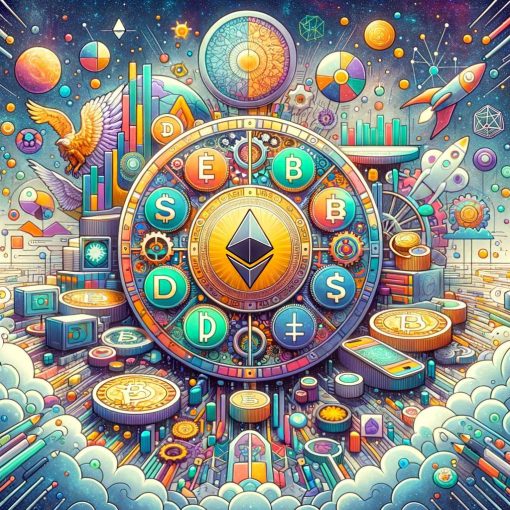
Explore Ethereum’s leading stablecoins-USDC, DAI, and USDT. This article explains how they maintain parity, their backing models (fiat, crypto-collateral, or issuer reserves), use cases, and trust considerations.