
What Is a Faucet? Free Testnet ETH for Developers
A faucet is a service that gives developers small amounts of free testnet ETH, letting them deploy contracts, test transactions, and debug applications without spending real cryptocurrency.

A faucet is a service that gives developers small amounts of free testnet ETH, letting them deploy contracts, test transactions, and debug applications without spending real cryptocurrency.

A gas limit sets the maximum computational work your blockchain transaction may consume. It helps prevent overspending on fees while ensuring validators can process the transaction safely.

Account abstraction makes Ethereum wallets more flexible, letting smart-contract logic handle approvals, recovery, and transaction fees while preserving Ethereum’s core security model.

MEV is the value traders and validators extract by changing the order of blockchain transactions. Learn how frontrunning, backrunning, and arbitrage create profits-and risks.

Danksharding redesigns how Ethereum handles data for rollups, lowering costs and increasing capacity without asking every validator to process every transaction.
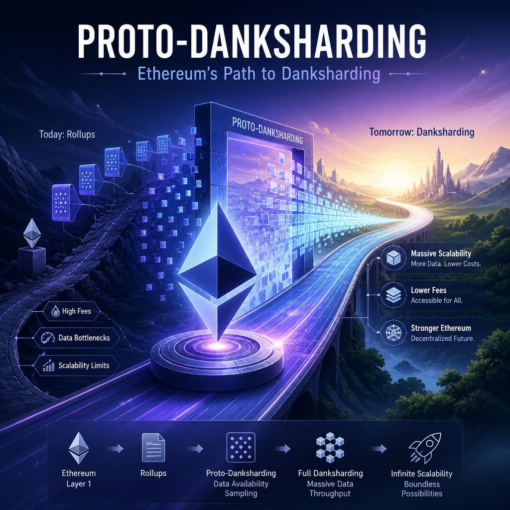
Proto-Danksharding introduces blob transactions to reduce rollup data costs while laying the groundwork for full Danksharding, bringing Ethereum closer to cheaper and more scalable use.

Cross-chain bridges move assets between networks, but their complexity creates weak points. Contract bugs, compromised validators, and flawed custody models have made them frequent targets for major losses.
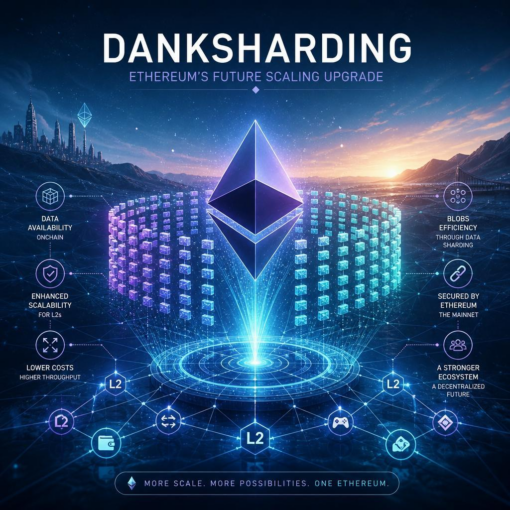
Danksharding is Ethereum’s next-generation scaling solution, combining data sharding with improved consensus to boost network throughput and reduce fees. This upgrade aims to enhance scalability while preserving security and decentralization.

Post-EIP-1559, Ethereum introduced a fee-burning mechanism that reduces circulating supply, shifting its monetary policy toward deflationary tendencies during high network activity. However, new issuance still occurs, balancing inflation and deflation.

Sharding is a method to enhance Ethereum’s scalability by splitting its blockchain into smaller, manageable parts called shards. This parallel processing increases transaction throughput, reducing congestion and improving network efficiency.