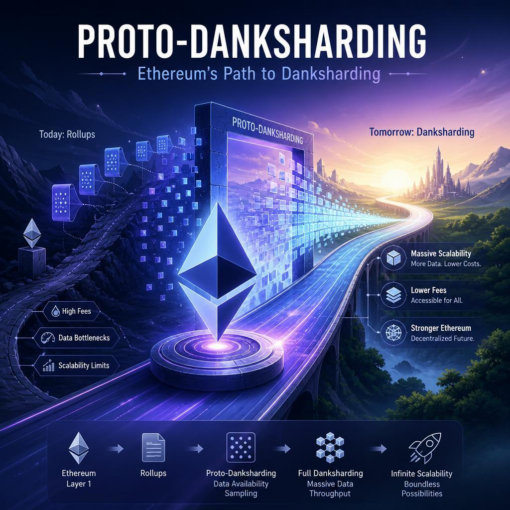
Proto-Danksharding: Ethereum’s Path to Danksharding
Proto-Danksharding introduces blob transactions to reduce rollup data costs while laying the groundwork for full Danksharding, bringing Ethereum closer to cheaper and more scalable use.

Proto-Danksharding introduces blob transactions to reduce rollup data costs while laying the groundwork for full Danksharding, bringing Ethereum closer to cheaper and more scalable use.

Cross-chain bridges move assets between networks, but their complexity creates weak points. Contract bugs, compromised validators, and flawed custody models have made them frequent targets for major losses.
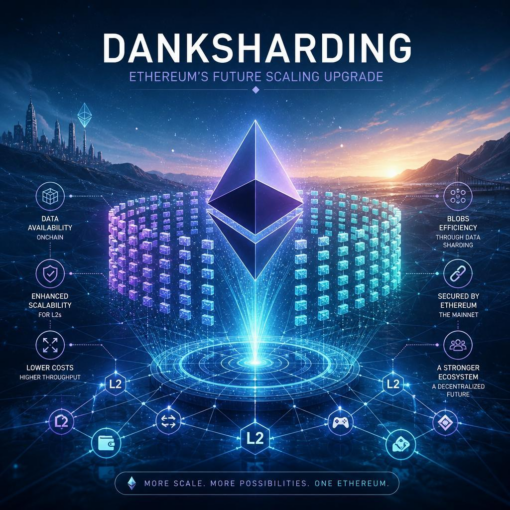
Danksharding is Ethereum’s next-generation scaling solution, combining data sharding with improved consensus to boost network throughput and reduce fees. This upgrade aims to enhance scalability while preserving security and decentralization.

Post-EIP-1559, Ethereum introduced a fee-burning mechanism that reduces circulating supply, shifting its monetary policy toward deflationary tendencies during high network activity. However, new issuance still occurs, balancing inflation and deflation.

Sharding is a method to enhance Ethereum’s scalability by splitting its blockchain into smaller, manageable parts called shards. This parallel processing increases transaction throughput, reducing congestion and improving network efficiency.

Composability in DeFi enables decentralized applications (dApps) to seamlessly integrate and build upon each other like Lego blocks. This interoperability fosters innovation, efficiency, and complex financial products within the blockchain ecosystem.

MakerDAO is a decentralized autonomous organization powering the stablecoin DAI, which maintains price stability through smart contracts on the Ethereum blockchain, enabling trustless and transparent financial services.

Layer 2 solutions like Optimism, Arbitrum, and zkSync enhance Ethereum’s scalability by processing transactions off-chain. They reduce congestion and fees while maintaining security through smart contract rollups and zero-knowledge proofs.
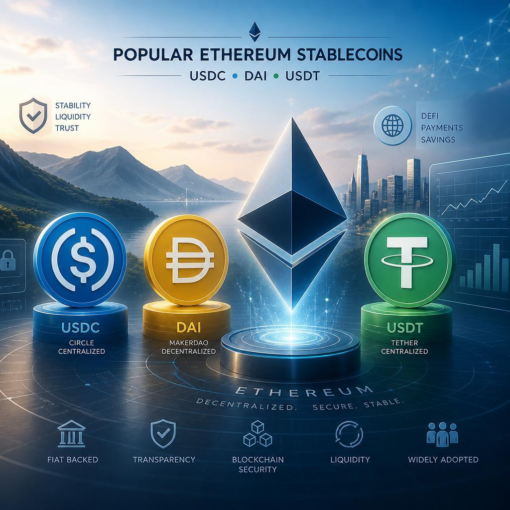
This article provides an authoritative overview of leading Ethereum stablecoins-USDC, DAI, and USDT-detailing their mechanisms, governance, and market roles to help users understand their distinct features and reliability.
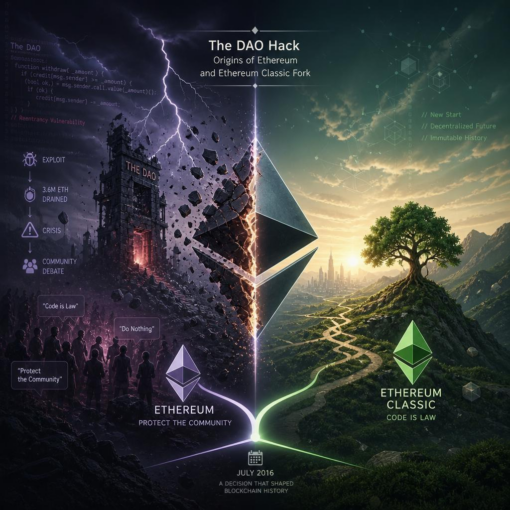
The DAO hack of 2016 exploited a vulnerability in Ethereum’s first major decentralized organization, resulting in a $60 million loss. This event triggered a contentious hard fork, giving rise to Ethereum and Ethereum Classic.